Cooking-Line Cleaning
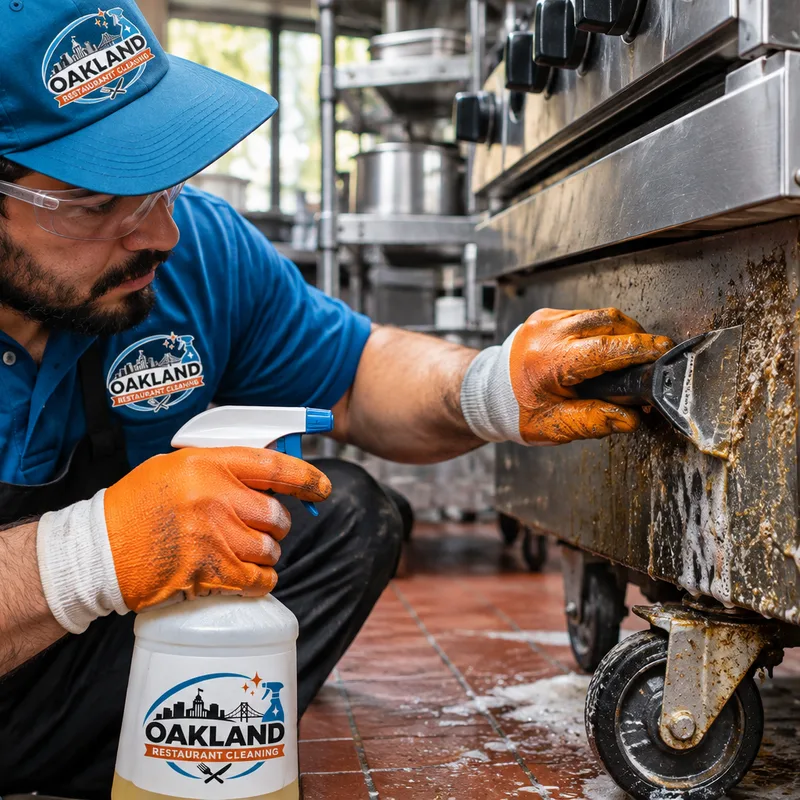
Degreasing of accessible ranges, fryers, griddles, ovens, salamanders, stainless-steel surfaces, equipment sides, and the floor beneath movable units. Cleaning methods are selected for the surface and the type of buildup.
Serving Oakland, California & surrounding areas
Mon–Fri 8am–6pm · Sat 9am–2pm
Detailed commercial cleaning for cooking equipment, prep areas, floors, walls, and hard-to-reach spaces, scheduled around your restaurant's operating hours.
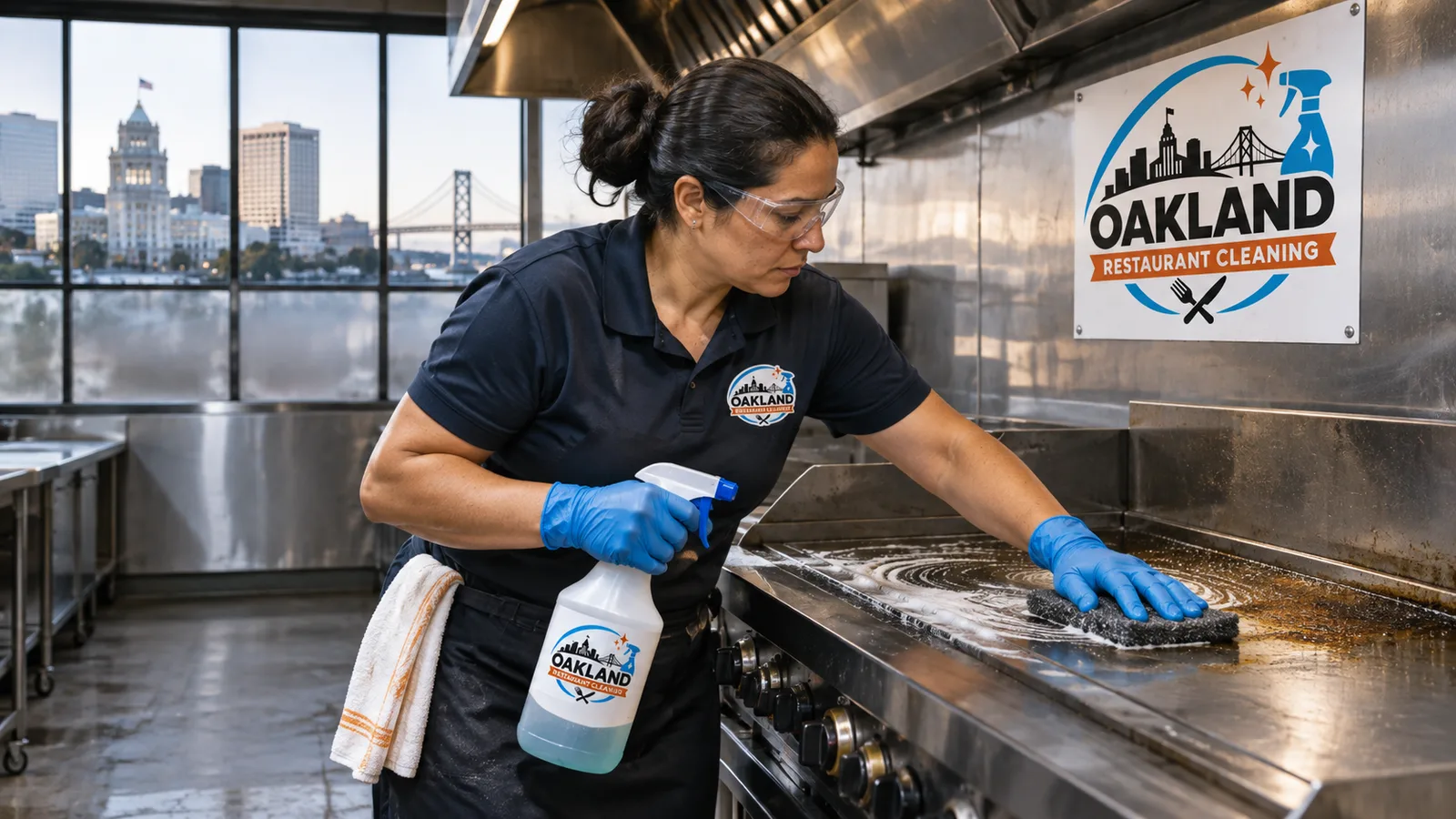
Kitchen Cleaning Services address the grease, carbon deposits, food residue, and soil that routine closing duties may leave behind. Oakland Restaurant Cleaning provides planned deep cleaning for restaurants and other commercial food operations. The scope can cover cooking-line surfaces, equipment exteriors and accessible interiors, prep areas, walls, floors, and difficult spaces beneath or behind movable units.
As restaurant specialists serving Oakland, we build the work plan around the kitchen's layout, operating schedule, equipment, and current condition. A compact line in Uptown may require careful staging where access is limited, while a larger Jack London Square operation may need cleaning divided by station so the kitchen can return to service on time. Restaurants near the Temescal and Fruitvale commercial corridors may also have late closing hours or heavy service periods that affect scheduling.
A written scope identifies what will be cleaned, what staff should remove beforehand, which equipment must be cool and safely shut down, and any exclusions. This gives managers a practical plan rather than a vague promise of a “deep clean.”
Degreasing of accessible ranges, fryers, griddles, ovens, salamanders, stainless-steel surfaces, equipment sides, and the floor beneath movable units. Cleaning methods are selected for the surface and the type of buildup.
Exterior and approved accessible-interior cleaning for commercial equipment. Sensitive controls, electrical components, gas connections, seals, and manufacturer restrictions are considered before work begins.
Detail cleaning for tile, grout, wall panels, baseboards, corners, drains where included, and soil trapped around equipment legs or casters. Grease films may need agitation and repeated recovery rather than a quick mop.
Cleaning of cleared prep tables, shelving, sinks, backsplashes, and other food-work surfaces. Food, utensils, smallwares, and loose inventory should be removed or protected before cleaning starts.
A focused service can address a neglected line, dish area, walk-in floor, or other defined zone without committing the entire kitchen to one cleaning window.
Periodic professional kitchen cleaning helps prevent heavy accumulation between major deep cleans. Frequency is based on cooking volume, menu, equipment, staffing, and the restaurant's own sanitation plan.
Restaurant Kitchen Cleaning is more than applying one degreaser to every surface. Grease may be fresh and oily, oxidized into a tacky film, or mixed with carbon near high-heat equipment. Mineral deposits can collect around wet areas, while grout and textured flooring retain soil that flat surfaces release more readily.
Our process may use scraping, controlled degreaser dwell time, hand agitation, detail brushes, microfiber recovery, wet extraction, or low-pressure rinsing where the kitchen and equipment permit it. Product choice must account for stainless steel, aluminum, painted surfaces, rubber seals, tile, grout, and food-contact areas. Food-contact surfaces require an appropriate final treatment before they return to use, following product labels and the restaurant's sanitation procedures.
Kitchen exhaust systems are a separate specialty from general kitchen cleaning. Where hood, duct, fan, or rooftop exhaust work is needed, it should be identified independently and handled under the correct scope. We do not blur that work into equipment or surface cleaning.
A defined sequence protects the work area, addresses buildup efficiently, and prepares management for reopening checks.
We review the cooking line, prep and dish areas, floors, access points, equipment mobility, utility connections, and visible buildup. Managers can identify priority areas and any operational limits.
The plan lists included surfaces and equipment, preparation responsibilities, timing, and exclusions. It also records whether units can be moved safely and who is responsible for shutdown or restart.
Food, utensils, smallwares, and loose items are removed or covered. Equipment must be cool where required. Nearby controls, electrical parts, and surfaces outside the scope are protected from moisture and chemicals.
Dry debris is removed first. Appropriate products are applied with the required dwell time, then buildup is scraped or agitated and recovered. Floors are normally completed after equipment and elevated surfaces.
The cleaned areas are checked with the manager, and any access limitations or maintenance concerns are documented. The restaurant completes its own opening checks, equipment restart, and food-safety procedures.
Oakland kitchens vary widely in age, footprint, and access. Older commercial buildings can have narrow passages, fixed equipment, uneven transitions, or limited staging room. Dense restaurant districts also make loading, waste handling, and after-hours access part of the planning conversation. These conditions do not change the cleaning standard, but they affect crew size, equipment choice, and how the work is sequenced.
A professional Kitchen Cleaning Company should ask how the restaurant actually operates. High-volume frying creates different buildup than baking or cold preparation. Open kitchens need close attention to visible stainless steel and floor edges. Small kitchens may need one station returned before another is taken out of service. Professional Kitchen Cleaning works best when the scope reflects those differences.
Restaurant managers are responsible for meeting applicable food-safety requirements, including requirements enforced through Alameda County's environmental health program. Cleaning supports that responsibility, but it does not replace required employee sanitation, pest control, equipment repair, or regulatory inspection.
Ask for a scope that names the equipment, surfaces, and kitchen zones included in the price. Confirm whether the work includes equipment interiors, underneath movable appliances, floor drains, walk-ins, ceilings, or high wall areas. Those items should never be assumed.
Discuss shutdown requirements early. Hot equipment cannot be cleaned safely, and cleaners should not disconnect gas, electricity, refrigeration, or plumbing unless that responsibility has been expressly assigned to a properly qualified person. The manager should also identify delicate finishes, damaged seals, loose tiles, leaking equipment, and areas that cannot tolerate moisture.
Scheduling matters as much as technique. Allow time after the last meal period for equipment to cool, the kitchen to be cleared, cleaning to be completed, and management to perform reopening checks. If the restaurant operates every day, phased cleaning may be more workable than taking the full line out of service at once.
Finally, decide what result is realistic. Heavy carbonization, corrosion, etched metal, failed grout, and permanently discolored finishes may remain after soil is removed. A credible provider distinguishes cleanable buildup from physical damage and recommends replacement or repair when cleaning cannot correct the condition.
A clear walkthrough and written scope help you schedule the work, prepare your staff, and understand exactly which equipment and kitchen areas will be cleaned.
Call for a Free QuoteThe price depends on kitchen size, equipment count, soil level, access, and whether the work is a targeted clean or a full deep cleaning. A compact cooking line with movable equipment requires less labor than a large kitchen with baked-on grease, fixed units, high surfaces, or limited after-hours access. An on-site review at the Oakland location is the reliable way to confirm a written price.
A focused area may be completed within one work window, while a full commercial kitchen deep cleaning can require a longer shutdown or several phases. Cooling time, item removal, grease severity, equipment mobility, and drying all affect the schedule. Oakland restaurants with tight loading access or narrow older kitchens should include setup and breakdown time in the plan.
After-hours scheduling may be available when arranged in advance and when enough time remains for cooling, cleaning, drying, and management's reopening checks. Late-closing operations should identify the earliest safe start time during the walkthrough. Building access, alarms, parking, and authorized entry also need to be settled before the crew arrives.
Yes, food, utensils, smallwares, disposable packaging, and loose inventory should be removed from the work area or protected as agreed in the scope. Staff should empty surfaces, identify items that cannot be moved, and follow the restaurant's food-safety procedures. This preparation gives cleaners access and reduces the risk of contamination.
Equipment is moved only when it is designed to move, access is safe, and utility connections allow it. Units hard-connected to gas, electricity, refrigeration, water, or drainage should not be shifted casually. During the Oakland walkthrough, we identify mobile equipment, fixed equipment, and areas that require a qualified trade before access is possible.
Cleaning frequency should be based on cooking methods, service volume, grease production, equipment design, and the restaurant's sanitation plan. A high-use fryer line may need targeted attention more often than a low-grease prep area. A first service establishes the actual soil level and helps management choose a practical recurring interval.
No, general restaurant kitchen cleaning and kitchen exhaust system cleaning are separate scopes. Surface and equipment cleaning may cover the cooking line, walls, and floors, while hood, duct, fan, and rooftop work requires specialized access and procedures. Confirm each scope independently so required exhaust work is not assumed to be included.
Tell Oakland Restaurant Cleaning about your equipment, operating hours, priority areas, and preferred cleaning window. We will help set expectations for preparation, access, timing, and the work needed before your kitchen returns to service.