
Commercial Kitchen Floors
Degreasing, scrubbing, edge work, and soil removal target the film that ordinary mopping can spread. Particular attention can be assigned to cook lines, dish areas, walk-in approaches, and routes to waste storage.
Serving Oakland, California & surrounding areas
Mon–Fri 8am–6pm · Sat 9am–2pm
Dependable cleaning plans for commercial kitchens, dining rooms, restrooms, and service areas, scheduled around your hours and operating needs.
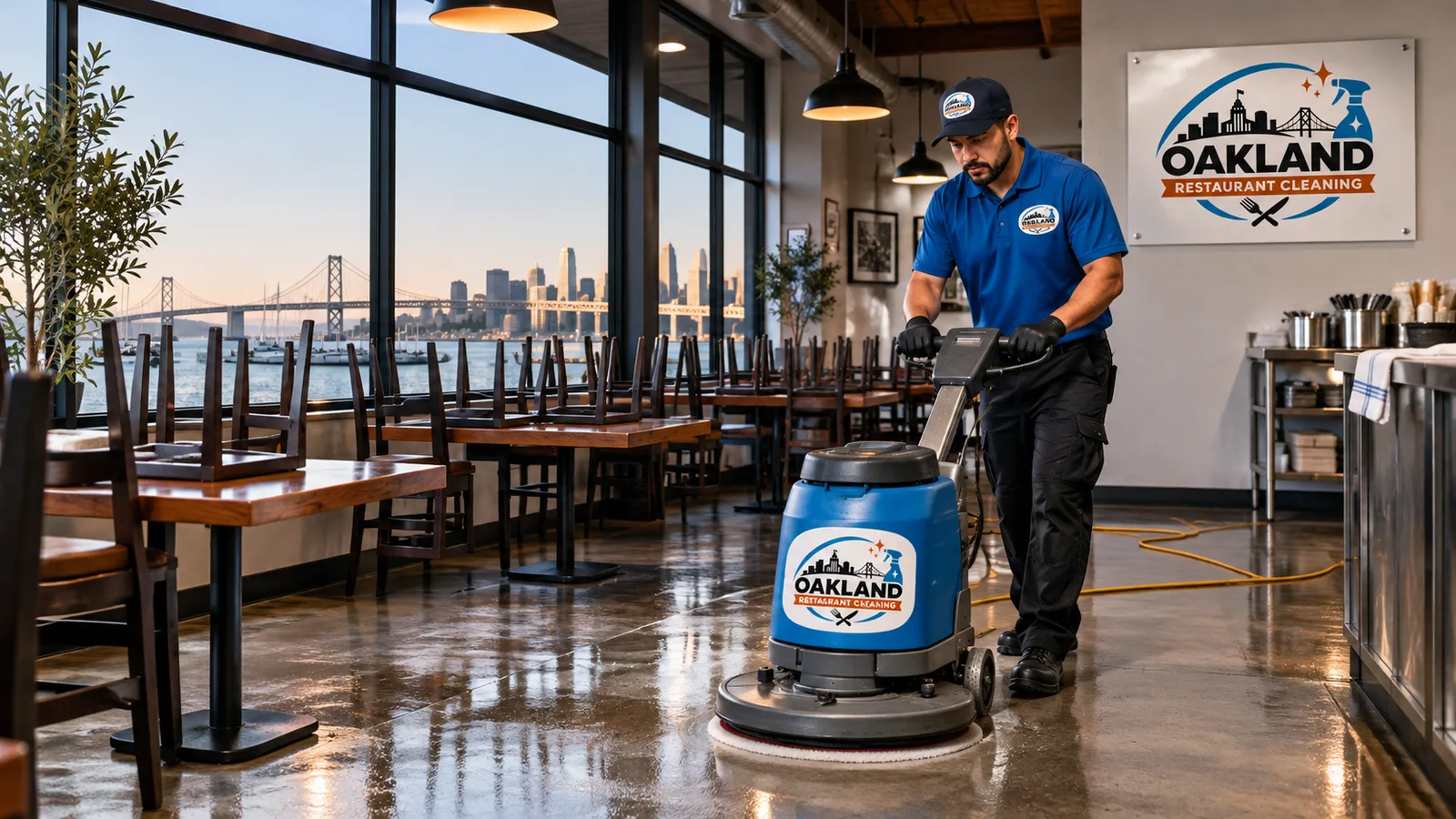
Restaurant Cleaning Alameda requires more than a quick pass over visible surfaces. Grease travels beyond the cooking line, food debris collects under equipment, and steady guest traffic marks floors and touchpoints. Oakland Restaurant Cleaning develops practical scopes for independent restaurants, cafés, bars, bakeries, and other food businesses in Alameda.
Our team handles guest-facing and back-of-house areas according to an agreed checklist. We are restaurant specialists serving Oakland, CA who work with nearby Alameda operators needing consistent standards without disrupting prep, service, deliveries, or closing duties. Before work begins, we identify access procedures, priority areas, floor materials, equipment boundaries, and any tasks your staff already completes. This keeps responsibilities clear and helps your managers inspect the work consistently.
Alameda has several distinct commercial settings. Park Street restaurants often work within active retail blocks where access and timing need close coordination. Webster Street businesses may have compact service areas or shared commercial surroundings. Restaurants near the South Shore Center can face heavier guest traffic and larger dining-room floor plans. Operators around Alameda Point may have converted or industrial-style spaces with different flooring and access needs. The cleaning plan should fit the actual premises rather than rely on a generic task list.
A complete scope can include the dining room, host stand, bar area, customer restrooms, kitchen floors, food-preparation surroundings, employee areas, and waste-handling zones. Common tasks include vacuuming, damp mopping, floor scrubbing, degreasing washable surfaces, wiping tables and chairs, cleaning restroom fixtures, sanitizing agreed high-touch points, and removing accessible debris beneath movable items.
Back-of-house cleaning requires careful product selection and task separation. Degreasers need the correct dwell time, and food-contact surfaces must be handled with products and procedures appropriate to their intended use. Cleaning removes soil; sanitizing reduces microorganisms on a previously cleaned surface. Those steps are related, but they are not interchangeable. Safety Data Sheets and product-label directions should remain available to staff.
We also account for floor type. Quarry tile and sealed concrete can tolerate methods that would be unsuitable for wood, luxury vinyl tile, or some natural stone. Grout lines, anti-slip textures, and edges near cooking equipment often need agitation rather than mopping alone. A site walk identifies these details before the schedule and scope are finalized.
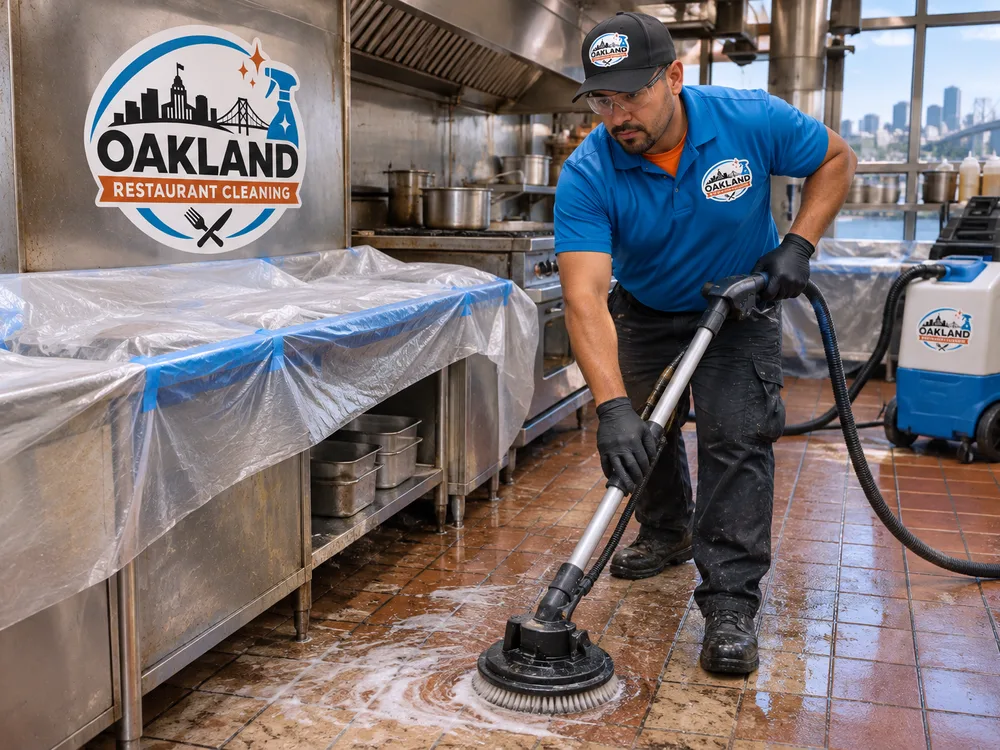
Degreasing, scrubbing, edge work, and soil removal target the film that ordinary mopping can spread. Particular attention can be assigned to cook lines, dish areas, walk-in approaches, and routes to waste storage.
Floors, baseboards, tables, chair legs, ledges, and agreed touchpoints receive attention after guests leave. The checklist can account for movable furniture and different floor finishes within one room.
Fixtures, partitions, mirrors, dispensers, floors, and high-touch surfaces are cleaned on a defined rotation. Restroom supplies can be checked when that responsibility is included in the scope.
Accessible washable surfaces, shelving exteriors, doors, walls near splash zones, and equipment exteriors can be included. Equipment interiors and technical components require explicit approval and safe access.
Entrances, pickup areas, corridors, and employee routes collect tracked-in grit and food debris. Routine floor care helps prevent abrasive soil from building up in the finish.
Scheduled detail work can address grout, baseboards, corners, floor edges, walls, and accessible areas behind movable equipment that are outside a standard nightly checklist.
A defined sequence connects your restaurant’s real operating conditions to a clear checklist and workable service schedule.
We review the kitchen, dining room, restrooms, storage access, floor materials, waste routes, and security procedures. Your manager can identify recurring trouble spots and tasks that must happen after equipment cools or staff finish closing.
The written checklist states which rooms, surfaces, and tasks are included. It also identifies exclusions, required access, frequency, product considerations, and whether your staff must move equipment or personal items.
Service can be planned around prep, operating hours, deliveries, and closing routines. Park Street access, shared commercial areas, alarm procedures, and key control can be addressed before the first visit.
The crew follows the agreed sequence to reduce cross-contamination between restrooms, dining areas, and kitchen zones. Supervisory checks and manager feedback help keep recurring work aligned with the checklist.
Menus, seating layouts, seasonal traffic, and operating hours can change the cleaning load. The scope can be reviewed when a new cook line, floor finish, pickup station, or service schedule changes what the premises require.
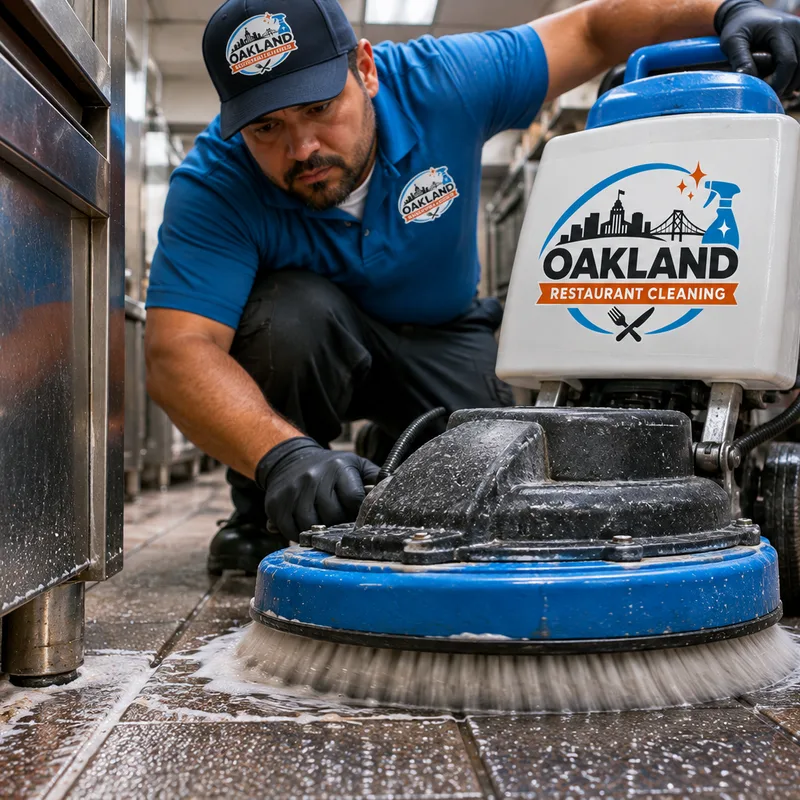
Recurring cleaning and deep cleaning solve different problems. Routine visits maintain floors, restrooms, guest areas, and assigned back-of-house surfaces at a steady baseline. Periodic detail work addresses buildup that takes more time, stronger agitation, or specialized equipment. A restaurant may need both, but each should have its own checklist.
Floor care is a common example. Daily sweeping and mopping remove loose soil, while an autoscrubber or rotary machine may be appropriate for periodic work on compatible hard flooring. Corners, grout, thresholds, and areas around equipment still need manual detailing. If a floor has a finish or coating, the manufacturer's maintenance requirements should guide chemical choice and machine pads.
Scheduling also affects results. A kitchen should be cool enough for safe access, food and utensils should be stored or protected, and the crew needs enough uninterrupted time for chemical dwell time, agitation, soil recovery, and drying. Rushing these steps can leave residue or move grease rather than remove it.
Restaurant cleaning should support the operator's food-safety program without making claims that cleaning alone can satisfy every regulatory duty. The California Retail Food Code governs retail food facilities, while the Alameda County Department of Environmental Health oversees local food-facility permitting and inspections. Restaurant management remains responsible for its facility, procedures, employee practices, and regulatory compliance.
A sound cleaning program starts with cross-contamination controls. Color-coded cloths or tools can separate restroom work from kitchen and dining tasks. Mop water and cleaning solutions should be changed when soiled, chemicals must be labeled and stored away from food, and food-contact surfaces need cleaning and sanitizing procedures that follow the product label and the restaurant's approved practices. Staff should never mix chemicals.
Ventilation hoods, ducts, fans, and fire-suppression components require specialized service and are different from general surface cleaning around a cook line. Pest control, grease-trap pumping, equipment repair, and hazardous cleanup also require separate qualified providers. We define these boundaries in the scope so restaurant managers know who handles each responsibility.
Alameda's bay-influenced weather can bring moisture and tracked-in grit to entrances and dining floors. Entry mat care and timely soil removal can therefore become more important during wet conditions. Near the shoreline, exterior dust and windblown debris may also increase the attention needed at doors and pickup areas. The service plan can shift effort to these zones when conditions change.
A written checklist, realistic schedule, and clear division of responsibilities make recurring restaurant cleaning easier to manage. Tell us which areas create the most work for your staff, and we will help define an appropriate scope.
Call for a Free QuotePricing depends on the restaurant's size, cleaning frequency, soil level, floor materials, operating schedule, and exact task list. A compact dining room with routine floor and restroom work requires a different crew plan than a large kitchen needing heavy degreasing and periodic machine scrubbing. Access around Park Street or within a shared commercial property can also affect setup time. A walkthrough is the reliable way to confirm the scope and price.
Yes, service can be arranged around closing, prep, and delivery schedules when building access and crew availability allow. The plan should account for alarms, keys, parking or loading restrictions, equipment cooldown, and the time floors need to dry. Alameda restaurants in active commercial areas may need a tighter access plan than freestanding premises.
The right frequency depends on food volume, cooking methods, guest traffic, staffing, and the tasks completed in-house. High-use restrooms and greasy kitchen floors may need attention more often than low-traffic storage areas. Many operators combine recurring service with less frequent detail cleaning for grout, edges, walls, and accessible spaces behind movable equipment.
Accessible equipment exteriors can be included when the scope and manufacturer guidance allow, but internal equipment components, hood ducts, fans, and fire-suppression systems require separate authorization or specialized providers. The walkthrough identifies safe boundaries around hot appliances, electrical components, gas connections, and fixed equipment. Those boundaries are documented before work begins.
Yes, the premises should be ready according to the agreed access and preparation plan. Food, utensils, and small equipment may need to be stored or protected, personal items should be removed, and any equipment scheduled to move must be safe to handle. Managers should also disclose sensitive surfaces, active leaks, damaged flooring, chemical restrictions, and alarm procedures.
Yes, the scope can cover selected guest-facing areas rather than the entire restaurant. This can suit Alameda operators whose kitchen staff already handle back-of-house cleaning but need dependable support for floors, seating areas, entrances, or restrooms. The written checklist should clearly separate staff duties from contractor duties.
Visit length is determined by square footage, layout, task frequency, buildup, equipment access, and crew size. Routine maintenance in a compact café may take less time than deep cleaning a full-service kitchen with textured tile and many floor edges. An on-site review provides a realistic service window that can be coordinated with closing and morning prep.
Share your operating hours, priority areas, floor types, and current cleaning routine. Oakland Restaurant Cleaning will review the premises and define a practical scope for your Alameda food business.