Cookline Exteriors
Degreasing accessible exteriors, control surrounds, splash areas, equipment sides, and the floor around the line after appliances have cooled.
Serving Oakland, California & surrounding areas
Mon–Fri 8am–6pm · Sat 9am–2pm
Detailed kitchen, dining area, and equipment care planned around your operating hours, food-contact requirements, and facility needs.
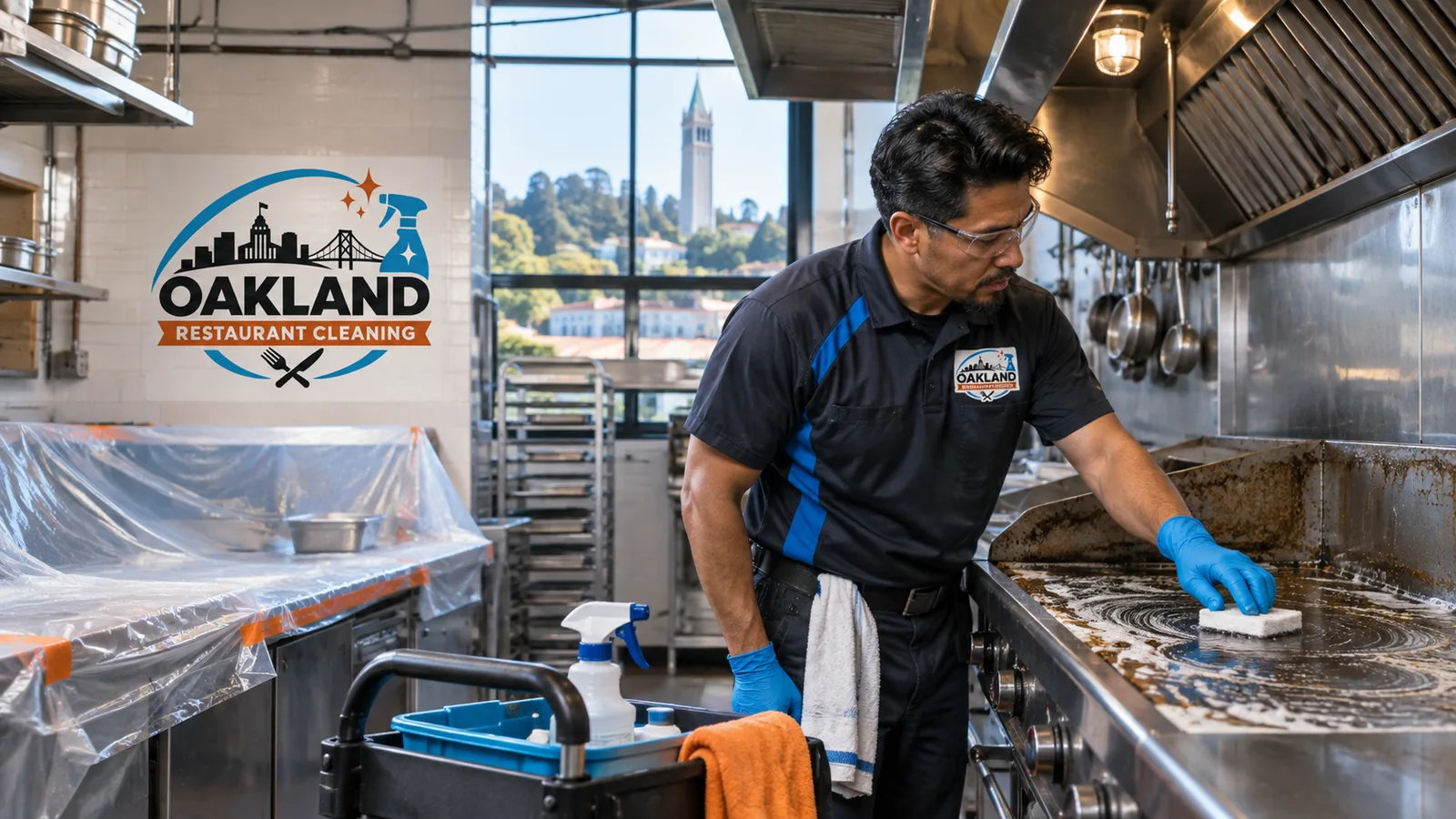
Restaurant Cleaning Berkeley requires more than a quick wipe-down after closing. Grease vapor settles on equipment, floors collect food debris around edges and under fixtures, and high-touch areas need consistent attention. Oakland Restaurant Cleaning builds a clear scope around the condition of your facility, the equipment in place, and the times when crews can work without disrupting service.
Our team handles recurring cleaning and focused deep-cleaning projects for restaurant kitchens, dining rooms, restrooms, storage areas, and service stations. Working as a professional restaurant company in Oakland from our base on Martin Luther King Jr Way, we coordinate service for Berkeley operators across the city boundary. That proximity is useful when a manager needs dependable scheduling, a written scope, and one point of contact.
The plan can account for compact kitchens near the UC Berkeley campus, where access windows and storage space may be limited, as well as restaurants along Fourth Street with active dining areas that must be reset before opening. Businesses near Shattuck Avenue may need work timed around late service or early deliveries. These operating details affect crew access, cleaning sequence, and drying time, so they are addressed before work begins.
A useful cleaning scope identifies surfaces, soil types, frequencies, exclusions, and access requirements. In kitchens, that may include degreasing cookline exteriors, cleaning backsplashes, scrubbing floors, detailing floor edges, wiping shelving, and cleaning accessible areas beneath movable equipment. Dining-room work may cover tables, chairs, baseboards, hard floors, entry glass, and high-touch points. Restrooms and employee areas can be added to the same schedule.
Food-contact surfaces require a two-stage approach: soil is removed with an appropriate cleaner, then an approved sanitizer is applied at the label concentration and allowed to remain wet for its stated contact time. Cleaning and sanitizing are separate steps. Chemicals also need to match the surface. For example, abrasive tools can damage stainless steel grain, while excessive moisture can affect electrical components and controls.
We confirm what staff will clear before arrival, which equipment may be moved safely, and which components require an authorized service technician. This keeps the work focused and prevents assumptions around hot equipment, gas connections, electrical isolation, or manufacturer-restricted parts.
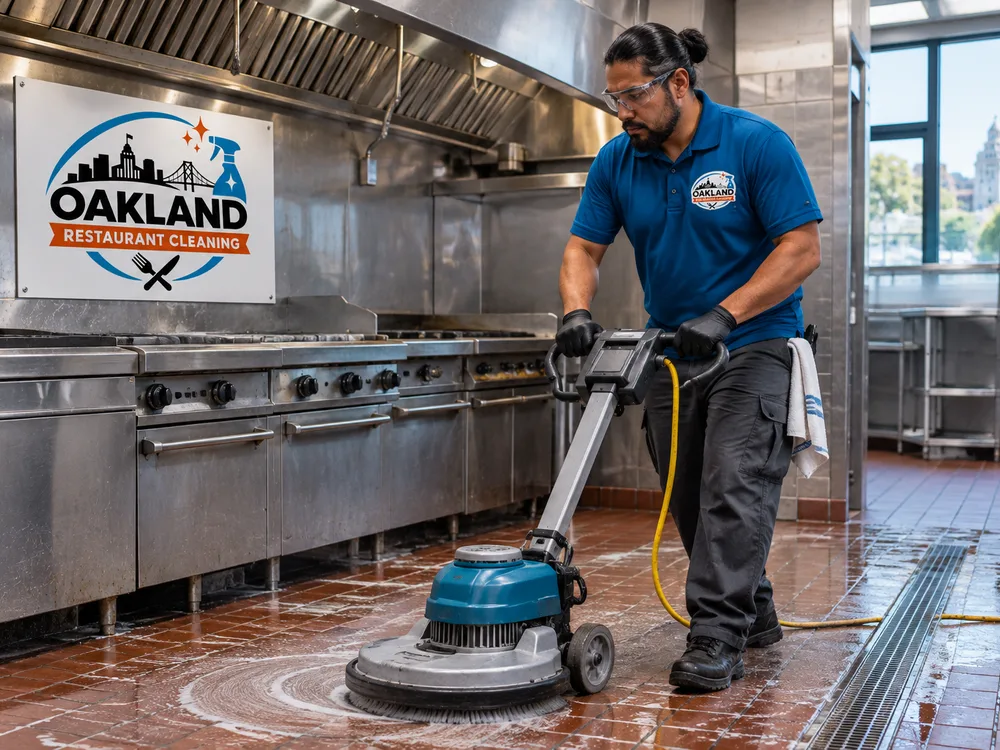
Degreasing accessible exteriors, control surrounds, splash areas, equipment sides, and the floor around the line after appliances have cooled.
Cleaning appropriate removable parts, stainless steel surfaces, shelving, casters, and accessible areas beneath movable units without disconnecting regulated utilities.
Soil removal, degreasing, scrubbing, rinsing as needed, and attention to corners, coves, grout lines, and routes where carts and staff travel.
Cleaning hard floors, tables, chairs, service counters, baseboards, entry glass, and frequently touched surfaces before the room is reset.
Cleaning fixtures, partitions, sinks, dispensers, touchpoints, floors, and employee break or changing areas included in the agreed scope.
Rotating tasks such as shelving, vents that are safe to access, wall spots, door frames, and storage-area edges so buildup does not remain outside daily routines.
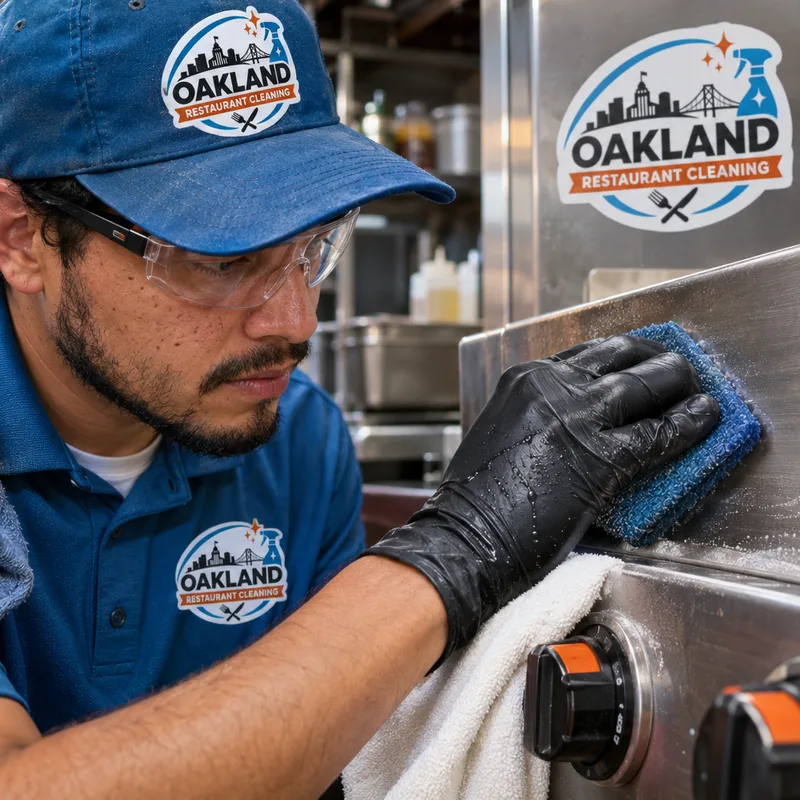
Equipment cleaning should follow the appliance manufacturer's instructions and the restaurant's shutdown procedures. Crews can remove baked-on food and grease from accessible surfaces using appropriate degreasers, non-scratch pads, detail brushes, microfiber cloths, and controlled rinsing. Stainless steel is cleaned with the grain, and sensitive labels, seals, controls, pilot areas, and electrical openings are protected.
A cleaning crew should not improvise with gas lines, hard-wired equipment, fire-suppression components, or internal mechanical assemblies. Hoods, ducts, fans, and suppression systems may require specialist work under their own standards and service records. Likewise, internal refrigeration repair and appliance maintenance belong with qualified technicians. We define those boundaries in writing before service.
Berkeley restaurants near Telegraph Avenue often operate in compact commercial spaces where equipment sits close to walls and storage is tight. In such settings, the plan identifies what can be rolled out, where removed parts can be cleaned, and how the crew will preserve clear walking routes. Careful sequencing matters as much as the cleaning product.
A defined sequence keeps responsibilities clear and helps the crew work safely around your facility and operating schedule.
We review the kitchen, dining space, restrooms, storage areas, access points, equipment layout, and the condition of surfaces. Managers can identify priority areas and any site rules.
The scope lists included tasks, service frequency, preparation responsibilities, exclusions, and a workable arrival window. One-time deep cleaning and recurring visits are planned differently.
Restaurant staff complete agreed shutdown steps, remove food and small wares, and identify equipment that must remain in place. The crew stages tools and chemicals to reduce cross-contact between zones.
Work generally moves from higher surfaces to lower ones and from cleaner zones toward heavier soil. Degreasers receive suitable dwell time, and floors are finished after equipment and surrounding surfaces.
Completed areas are checked against the written scope. For recurring work, managers can adjust rotating detail tasks as traffic, menus, equipment, or operating hours change.
The right frequency depends on cooking volume, menu, traffic, floor type, ventilation, and what the in-house team completes each shift. A high-output cookline may need frequent degreasing around equipment and adjacent floors. A dining room with steady foot traffic may need routine hard-floor care plus periodic machine scrubbing. Storage rooms often benefit from scheduled edge and shelving work that is easy to postpone during daily operations.
Campus calendars can change demand near UC Berkeley, while restaurants in commercial corridors may have delivery windows, sidewalk activity, or neighboring tenants to consider. We plan noisy tasks, equipment movement, and drying periods around those constraints. California's wet-weather periods also bring more tracked-in grit and moisture, which can increase entry-floor attention and mat maintenance.
Recurring service can be organized by shift, week, or a rotating task list. A one-time deep clean is useful before an opening, after equipment changes, during a seasonal reset, or when accumulated residue exceeds what staff can reasonably address between services. The written scope should state what will be completed during each visit rather than relying on a broad promise to clean everything.
Restaurant cleaning in Berkeley typically costs about $300 to $1,200 per visit, while large kitchens, heavy grease buildup, or extensive equipment detailing may cost $1,500 or more. A smaller recurring visit generally falls toward the lower end; a one-time deep clean with cookline and floor work falls higher.
Final pricing depends on square footage, soil level, equipment count, access, cleaning frequency, crew hours, and whether service must occur overnight. The written estimate identifies included areas and preparation requirements. Exact cost is confirmed after a facility walkthrough or detailed consultation.
A clear cleaning scope gives managers defined tasks, practical timing, and service boundaries before a crew enters the facility.
Call for a Free QuoteYes, service can be planned for an after-hours window when crew access, alarm procedures, equipment cooldown, and the required drying time are confirmed in advance. For restaurants near Shattuck Avenue or Telegraph Avenue, the schedule may also account for late service, deliveries, and restricted loading access.
The proper interval depends on cooking volume, grease production, traffic, ventilation, and the daily work handled by staff. A facility walkthrough can separate daily sanitation duties from weekly or periodic detail work, then place floors, equipment exteriors, shelving, and hard-to-reach areas on a practical rotation.
Accessible areas can be cleaned when equipment is approved for movement and can be repositioned safely without disconnecting gas, electrical, plumbing, or fire-suppression components. The written scope identifies movable units, fixed appliances, staff preparation, and any work that requires an authorized technician.
Staff should follow the agreed shutdown checklist, secure or remove food, clear small wares, empty designated shelves, and allow hot equipment to cool. Managers should also provide access instructions and flag damaged cords, loose casters, active leaks, or equipment that must not be moved.
Yes, food-contact surfaces can be cleaned and sanitized when they are included in the scope and the surface is suitable for the selected products. Soil must be removed first, followed by an approved sanitizer used at its labeled concentration and contact time; staff should keep food and utensils protected during the work.
No, exterior equipment detailing is different from cleaning commercial exhaust ducts, rooftop fans, and fire-suppression components. Those systems may require specialist procedures and documentation, so any hood-related work should be defined separately rather than assumed to be part of general kitchen cleaning.
Recurring service can be scheduled for campus-area restaurants when the access window, key or alarm process, available staging space, and changing academic-calendar demand are discussed first. Compact kitchens may require a rotating plan so crews can detail selected equipment and storage zones without overcrowding the workspace.
Tell Oakland Restaurant Cleaning about your facility, equipment, operating hours, and priority areas. We will help define a practical scope and schedule for your Berkeley restaurant.