
Fixtures and touchpoints
Toilets, urinals, flush controls, seats, sinks, faucets, handles, latches, grab bars, and dispensers are cleaned according to the written checklist.
Serving Oakland, California & surrounding areas
Mon–Fri 8am–6pm · Sat 9am–2pm
Keep guest and staff restrooms sanitary, stocked, and ready for service with a cleaning plan built around your hours, traffic, and facility needs.
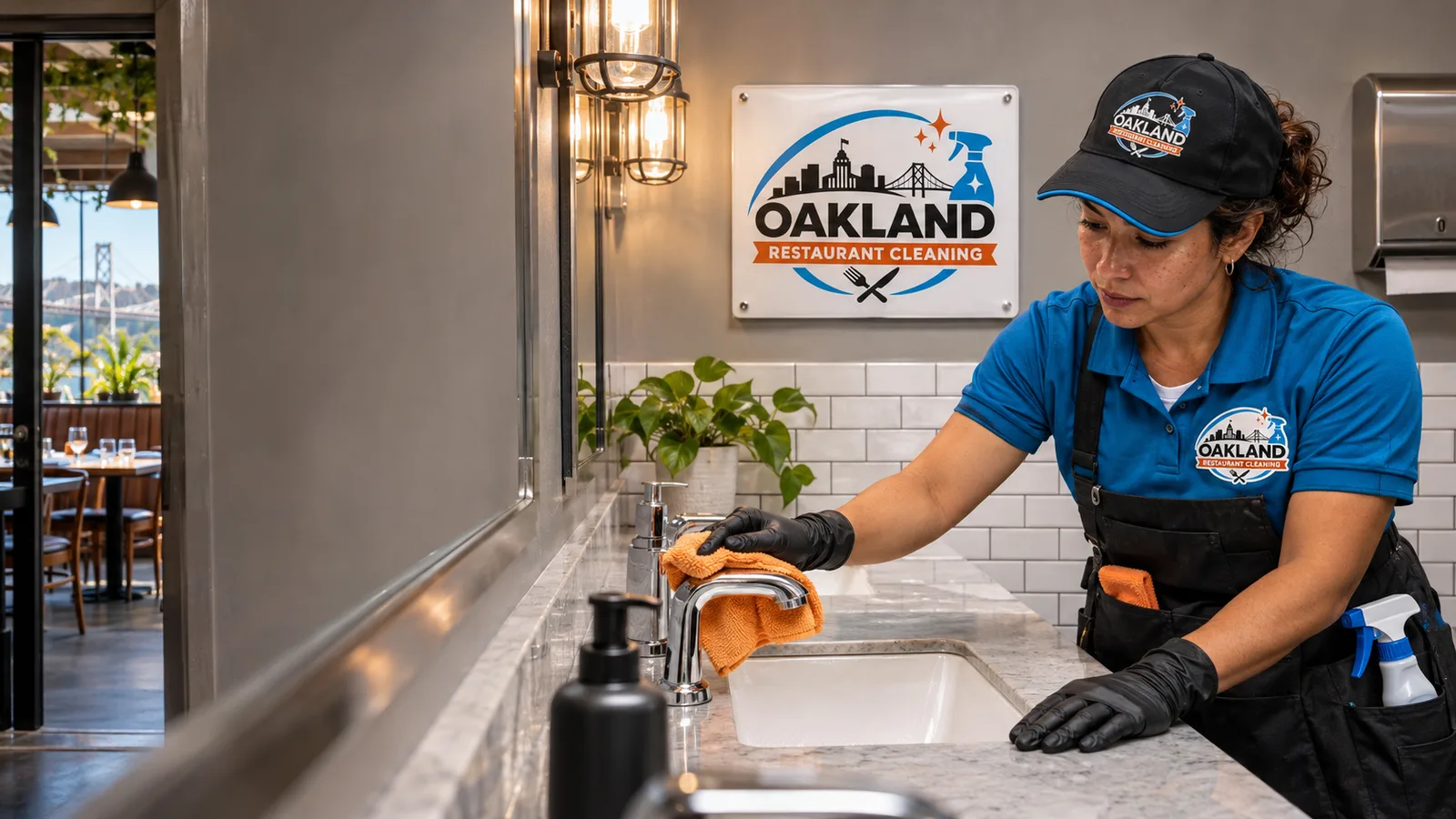
Restaurant Bathroom Cleaning Emeryville addresses a part of your operation that guests notice immediately. Smudged mirrors, overflowing waste bins, empty dispensers, lingering odors, and dirty fixtures can undermine an otherwise good meal. Oakland Restaurant Cleaning provides scheduled restroom care for restaurants that need dependable results without disrupting service.
A useful plan starts with the room itself. We review fixture counts, floor and wall materials, traffic patterns, service hours, dispenser locations, and recurring trouble spots. A compact single-user restroom needs a different routine than a multi-stall facility near a busy dining room. To accommodate operating demands, Oakland's trusted restaurant team performs the work and documents the agreed scope so managers know what is covered.
Emeryville's compact commercial areas include restaurants serving office workers, shoppers, hotel guests, and residents. Businesses near Bay Street may see concentrated traffic around shopping and dining periods, while locations around the Public Market can face repeated restroom use throughout meal service. Restaurants near the Powell Street corridor may also serve travelers and employees moving between commercial properties. Cleaning frequency should follow actual use rather than a generic timetable.
A complete restroom visit can include toilets, urinals, partitions, sinks, faucets, counters, mirrors, dispensers, doors, handles, grab bars, baseboards, floors, floor drains, and waste containers. The exact checklist is set for your facility. High-touch points receive deliberate attention because handles, flush controls, latches, and faucet controls are contacted repeatedly.
Cleaning and disinfection are separate tasks. Soil and residue must first be removed with a compatible cleaner. A disinfectant is then applied to the appropriate hard, nonporous surface and left wet for the dwell time stated on its label. Wiping it away too soon can prevent the product from working as directed. Our team also avoids mixing incompatible chemicals and uses separate tools or color-coded cloths to reduce cross-contamination between toilets, sinks, and other surfaces.
Floors are cleaned to the edges and around fixtures, where splash residue and tracked-in soil collect. When floor drains are included, we clear accessible debris and clean the surrounding area. Plumbing repairs, pest treatment, and drain-line work are separate trades, so visible leaks, damaged caulk, loose fixtures, or persistent drainage problems are reported to management rather than hidden with fragrance.
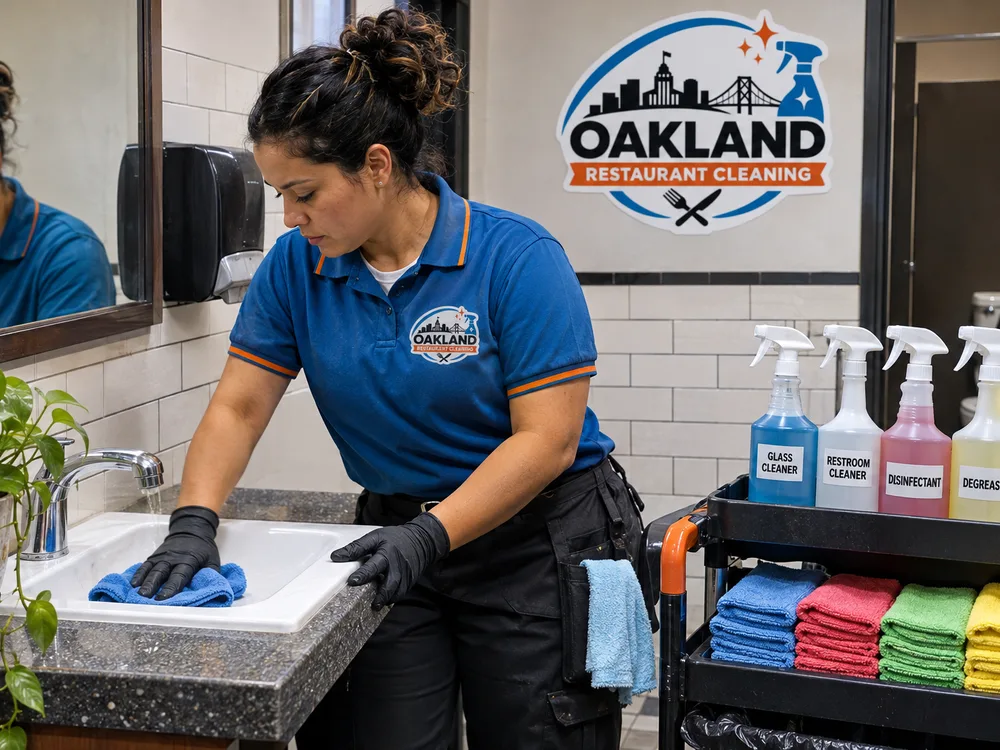
Toilets, urinals, flush controls, seats, sinks, faucets, handles, latches, grab bars, and dispensers are cleaned according to the written checklist.
Routine floor care removes tracked-in soil and restroom residue, with attention to corners, baseboards, fixture bases, and accessible areas around floor drains.
Mirrors, countertops, splash areas, and compatible wall surfaces are cleaned without leaving avoidable streaks or heavy product residue.
Waste is removed and liners are replaced. Paper goods and soap can be replenished from the restaurant's stock when that duty is included in the scope.
The team targets residue around fixtures, waste containers, grout lines, and drains rather than relying on fragrance to cover an unresolved source.
Managers can be alerted to low supplies, leaks, damaged dispensers, loose hardware, failed caulk, or unusual staining noticed during service.
A defined sequence supports safe access, correct product use, consistent cleaning, and clear reporting.
We review each guest and staff restroom, note the fixture count and surface materials, and identify access limits, storage arrangements, and recurring concerns.
The written scope states what is cleaned, which consumables may be restocked, and when the work occurs. Scheduling may be arranged before opening, after closing, or during another agreed low-traffic window.
The cleaner posts any needed wet-floor warning, removes waste, cleans visible soil, and works through fixtures and touchpoints using tools assigned to the appropriate restroom zone.
The selected disinfectant is used according to its label, including surface compatibility and dwell time. Products are never mixed to increase strength.
Floors receive final attention, supplies included in the scope are checked, and the room is reviewed. Facility issues that cleaning cannot correct are brought to management's attention.
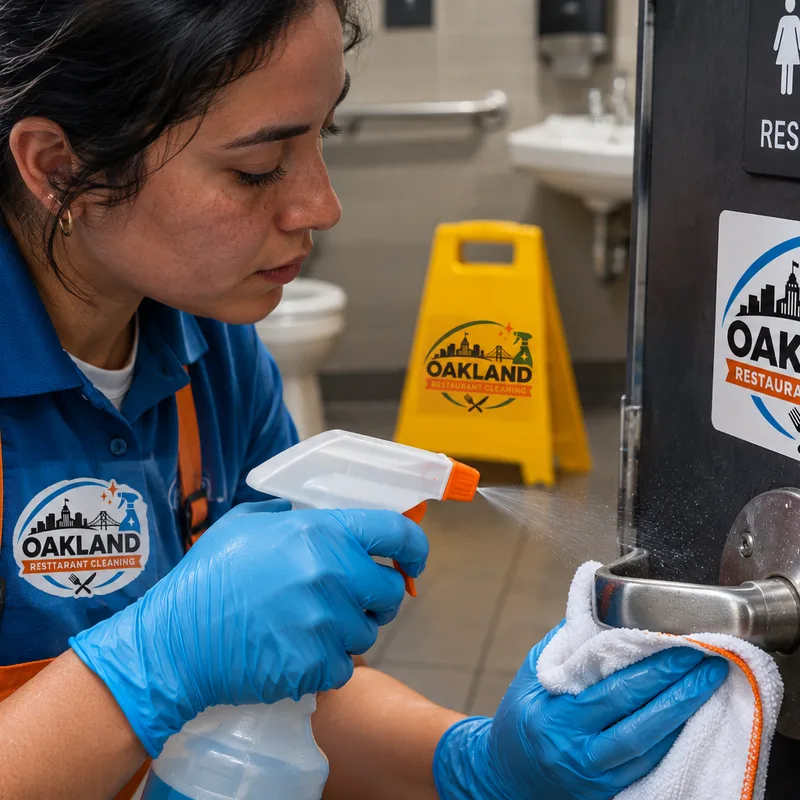
Restroom care has to fit food-service operations without interfering with guests or employees. The cleaning window, key or alarm access, wet-floor controls, supply storage, and communication contact should be settled before recurring work begins. If a restroom remains open during business hours, the plan must account for safe access and temporary closure while floors or treated surfaces are wet.
Frequency depends on occupancy, hours, restroom size, and traffic. A reservation-driven dining room may need a different schedule than a counter-service restaurant with steady turnover. Scheduled professional cleaning also does not replace staff checks during service. Employees may still need to respond to spills, empty dispensers, or an overflowing bin between visits.
Restrooms are one part of a wider restaurant cleaning plan when dining, entry, or back-of-house areas also need scheduled attention. Those areas should have their own tools, procedures, and written tasks. Keeping the restroom scope distinct makes accountability clearer and helps prevent tools used near toilets from moving into food-related spaces.
Restroom surfaces vary, and a harsh product is not automatically a better product. Acidic bowl cleaners, alkaline degreasers, neutral floor cleaners, glass cleaners, and EPA-registered disinfectants have different purposes. The product label governs dilution, required personal protective equipment, approved surfaces, and contact time. Natural stone, coated metal, grout, resilient flooring, and electronic fixtures may each require a compatible approach.
Persistent odor needs investigation. Common sources include residue at fixture bases, contaminated grout, neglected waste containers, dry or dirty drain areas, and plumbing defects. Cleaning can remove accessible organic soil, but it cannot correct a failed wax ring, leaking pipe, sewer-gas issue, or damaged floor substrate. Separating cleaning concerns from repair needs prevents repeated treatment of a symptom.
Consistency also depends on scope control. Oakland Restaurant Cleaning can work from a location-specific checklist rather than leaving each visit to memory. Managers should know whether walls, vents, drains, dispensers, supply replenishment, or periodic detail work are included. They should also have a clear way to report a missed item or request an adjustment as restroom use changes.
Recurring restaurant bathroom cleaning in Emeryville typically ranges from about $75 to $250 per visit for a small to mid-sized facility, while intensive first-time or restorative cleaning may range from about $200 to $600 or more. These are general, nonbinding estimates.
Final pricing depends on restroom count, fixture and stall count, condition, visit frequency, access hours, floor material, supply restocking, and whether detail work is needed. A written estimate should identify recurring tasks and periodic items separately. The exact cost is confirmed after a facility walkthrough or service consultation.
The right frequency depends on traffic, operating hours, fixture count, and staff checks between professional visits. A restaurant near Bay Street with concentrated dining and shopping traffic may need more frequent service than a small reservation-only dining room. The schedule should be adjusted when recurring odors, full bins, visible soil, or empty dispensers appear between visits.
Yes, service can be planned for an agreed period before opening, after closing, or during a low-traffic window, subject to access and scheduling availability. The setup should address keys or alarms, secure entry, chemical storage, temporary restroom closure, and who receives condition reports.
Restocking can be included when the restaurant provides compatible supplies and the task is listed in the scope. During the walkthrough, identify dispenser types, stock location, minimum supply levels, and whether low inventory should be reported to a manager.
Cleaning can remove many odor sources, but it cannot fix plumbing or structural defects. The service should target residue around fixtures, waste bins, grout, and accessible drain areas. A persistent sewer-like smell, visible leak, failed seal, or recurring backup should be assessed by the appropriate repair professional.
Restroom tools should be kept separate from tools used in dining or food-related spaces. Color-coded cloths, dedicated mop equipment, labeled products, and a defined storage method help control cross-contamination. The exact tool-separation process should be confirmed in the service plan.
A small restroom may take less than an hour, while multiple stalls, heavy buildup, or first-time detail cleaning can require considerably longer. Fixture count, floor condition, product dwell time, access, and whether the room remains in use all affect duration. A walkthrough provides the soundest time estimate.
A proposal should identify each restroom, the tasks performed, visit frequency, service window, exclusions, consumable responsibilities, and how facility concerns are reported. It should also distinguish routine work from periodic details such as wall washing, grout treatment, vent cleaning, or heavier floor care.
A restroom walkthrough can turn recurring complaints, unclear duties, and inconsistent supply checks into a written cleaning plan that fits your restaurant's operating hours.
Call for a Free QuoteTell Oakland Restaurant Cleaning about your restroom count, current concerns, preferred service window, and cleaning frequency. We will discuss the scope and prepare a clear plan for dependable care.