Restaurant cleaning · Oakland

Restaurant Cleaning Services in Oakland

Detailed cleaning for dining rooms, bars, restrooms, floors, high surfaces, and back rooms, scheduled around your operating hours.

Written cleaning scope Surface-specific care Oakland service
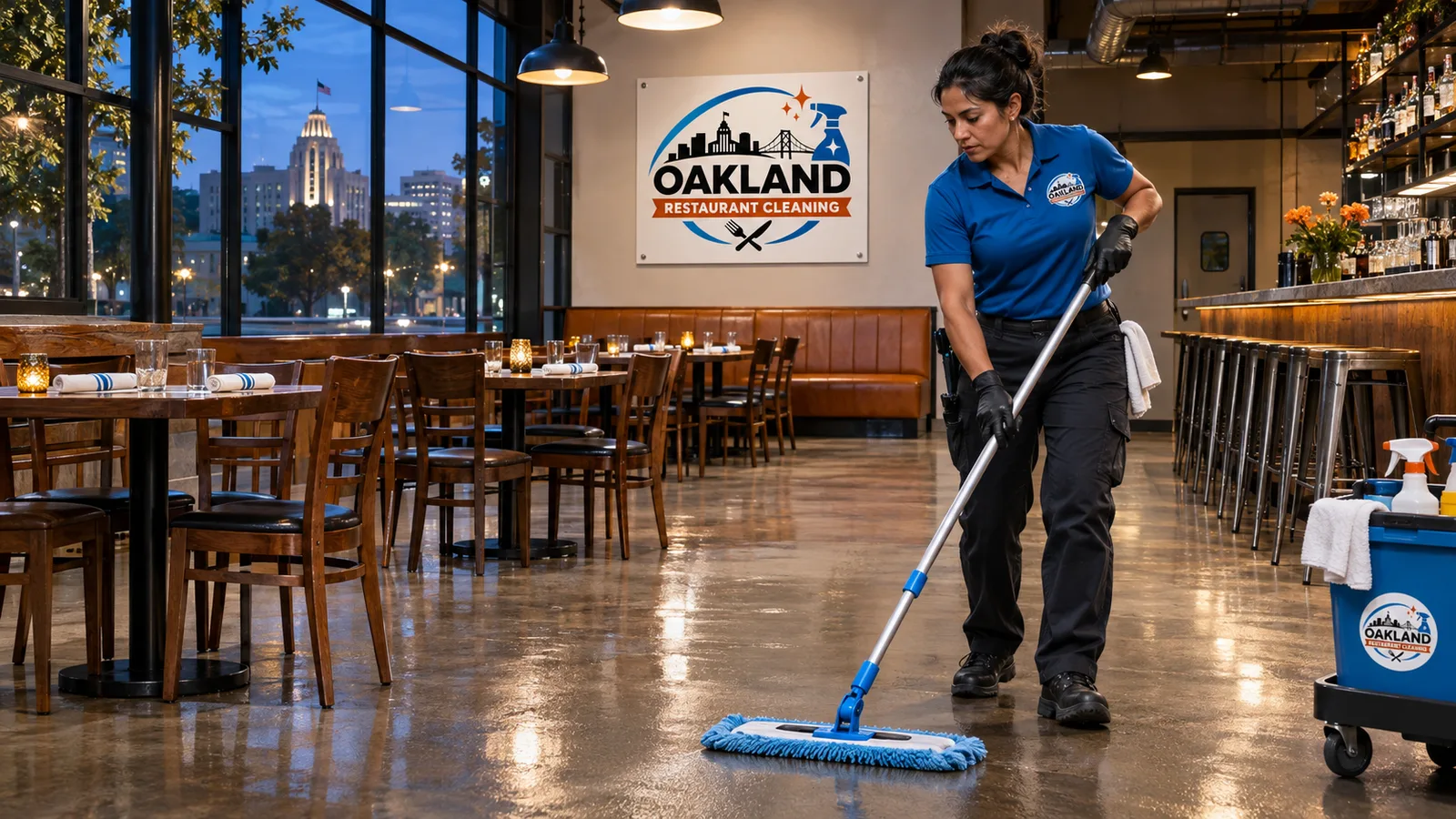
A professional cleaner using a microfiber mop in a polished Oakland restaurant dining room after closing, with tables, chairs, and a bar visible.
Cleaning planned around service

Restaurant Cleaning Services Built Around Daily Operations

Restaurant Cleaning Services should protect the guest experience without getting in the way of prep, service, or closing duties. Oakland Restaurant Cleaning develops a written scope around your floor plan, traffic level, surface materials, and operating schedule. The work may cover the front of house, dining room, bar, guest restrooms, service corridors, storage areas, and selected back-of-house spaces.

Our cleaners focus on the places guests notice and the areas routine closing work can miss: sticky edges under tables, dust on ledges, fingerprints on doors, buildup along baseboards, and residue near bar rails. For every visit, an experienced restaurant team in Oakland, CA coordinates the work around access, alarm procedures, key handling, and the hours when your staff needs clear use of the space.

Oakland restaurants operate in many kinds of buildings. Uptown and Downtown dining rooms often have frequent foot traffic and compact service paths. Temescal businesses may occupy narrow storefronts where chairs, counters, and equipment leave limited room for floor work. Jack London Square restaurants can have larger guest areas and event-driven traffic, while Rockridge dining rooms may need careful work around closely spaced furnishings. The cleaning plan should fit the actual room rather than a generic checklist.
Request a Callback
Guest-area coverage

Front of House Cleaning That Covers the Details

Dining Area Cleaning

Table bases, chair legs, booths, partitions, host stands, ledges, doors, and other touchpoints are cleaned according to the agreed scope. Furniture can be moved when practical so crumbs and soil do not remain around feet and floor edges.

Restaurant Bar Cleaning

Bar fronts, rails, stools, footrests, shelving exteriors, mirrors, and nearby floors receive focused attention. The scope distinguishes cleaning access from staff-controlled beverage equipment, glassware, food, and secured inventory.

Restaurant Restroom Cleaning

Guest restrooms are cleaned with separate tools and color-coded microfiber where specified. Fixtures, dispensers, partitions, mirrors, touchpoints, floors, and visible splash areas are addressed, with restocking included when supplies are provided.

Entry and Waiting Areas

Door glass, handles, host areas, mats, and hard-floor entry zones collect fingerprints, grit, and tracked moisture. Cleaning these areas before opening helps the first part of the guest path look cared for.

Back Room Cleaning

Approved storage rooms, staff areas, corridors, and non-production spaces can be added to the scope. Cleaning around food preparation equipment, grease systems, or active production areas requires clearly defined access and procedures.

Detail and Periodic Work

Baseboards, vents, ceiling-level ledges, wall spots, furniture undersides, and other low-frequency tasks can rotate through a maintenance schedule instead of being deferred indefinitely.

Request a Callback
Surface-specific floor care

Restaurant Floor Cleaning by Surface and Soil Type

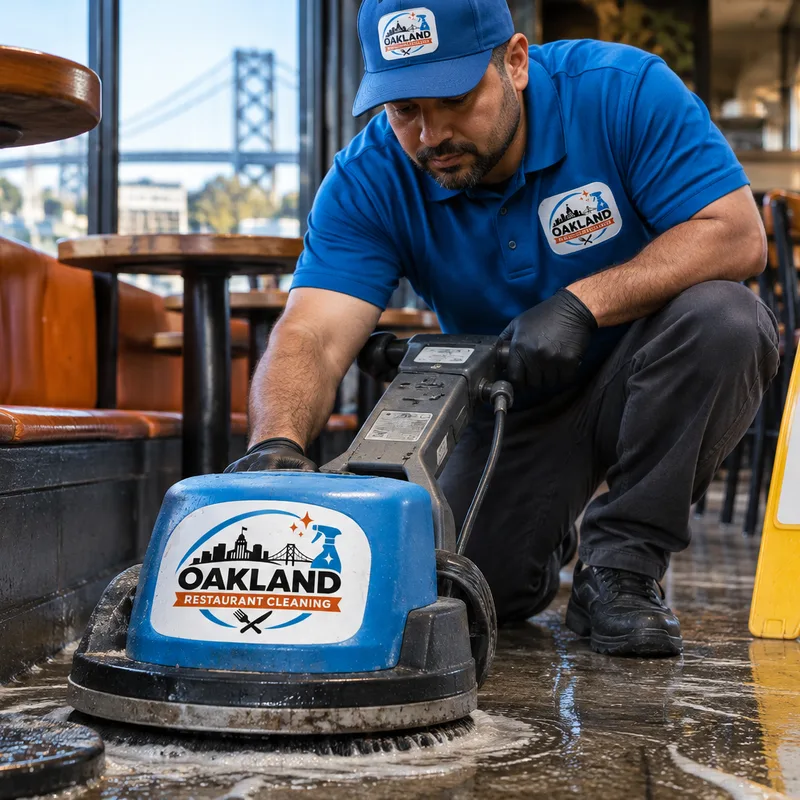
Restaurant Floor Cleaning starts with the material underfoot. Tile and grout, sealed concrete, resilient flooring, wood, and carpet all respond differently to water, chemistry, agitation, and drying time. The plan should also account for grease migration near service doors, beverage residue around bars, gum, chair scuffs, and grit carried through entrances.

Routine service may include vacuuming or dust mopping, wet mopping with properly diluted cleaner, edge work, and spot treatment. Periodic floor care can add machine scrubbing or other surface-appropriate methods after the floor and finish are identified. Grout lines often need agitation rather than repeated passes with a mop. Wood and some finished floors require controlled moisture and compatible products.

Wet-floor signs and a clear work sequence help keep staff away from freshly cleaned areas. When cleaning occurs between shifts or before opening, drying time is built into the route. Oakland's rainy periods can increase tracked moisture and grit at entrances, so mat care and entry-floor attention may need to increase with the weather.

Request a Callback
Close view of a restaurant cleaner using a compact floor machine on hard flooring, with edge areas, table bases, and wet-floor signage visible.
Floor methods are selected for the material, finish, soil, and available drying time.
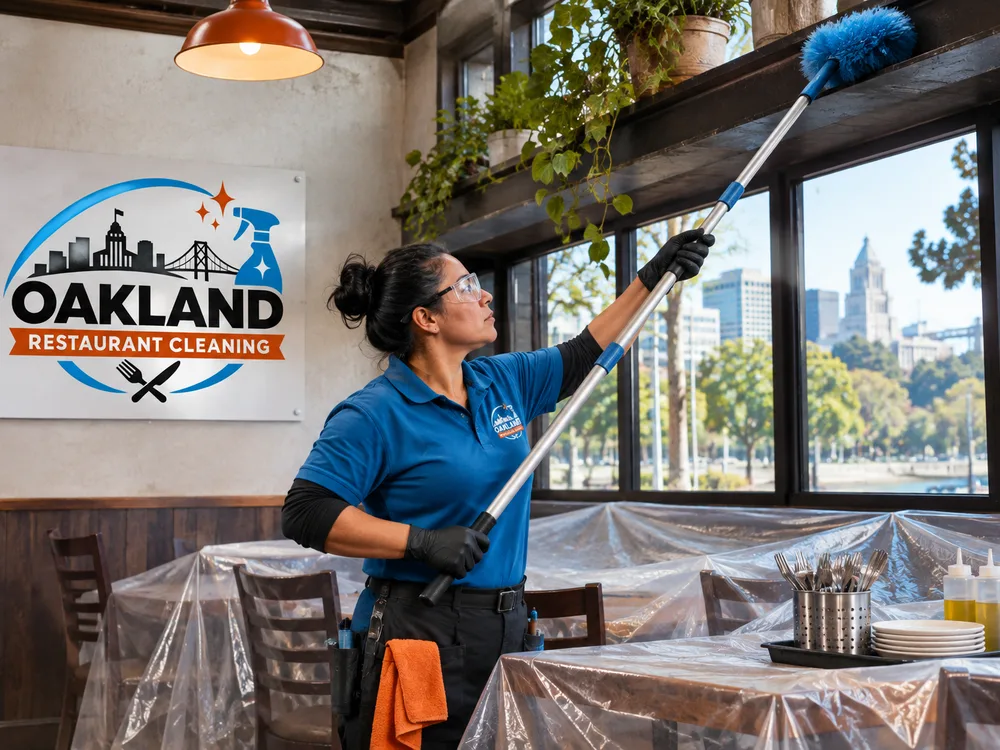
A trained restaurant cleaner performing controlled high dusting on an overhead ledge with an extension tool while dining tables and food-contact items are protected.
Controlled high-to-low cleaning keeps released dust from undoing completed work.
Periodic overhead care

High Dusting for Overhead Surfaces

High Dusting removes settled dust from reachable overhead surfaces that ordinary nightly cleaning does not cover. Common targets include ceiling-level ledges, exposed conduit, accessible duct exteriors, light housings, decorative beams, tops of partitions, high shelving, and wall-mounted fixtures. The exact list depends on the building and safe access.

Work starts with an access review. Tables, uncovered food, glassware, and sensitive equipment must be moved or protected before dust is disturbed. Cleaners generally work from higher surfaces toward lower ones so released material can be captured during the final wipe-down, vacuuming, and floor cleaning. HEPA-filtered vacuum tools and microfiber dusting equipment may be used where suitable.

High work should never be improvised around active guests or food preparation. Ladder placement, fixture condition, ceiling height, and nearby obstacles determine what can be completed during a standard visit and what requires a separate plan. High Dusting can be scheduled periodically and paired with detailed dining-room cleaning to reduce disruption.

Request a Callback
Controlled workflow

How We Build and Maintain the Cleaning Plan

A defined route coordinates access, reduces cross-contamination, and keeps recurring work aligned with your restaurant's changing needs.

01

Walk Through the Restaurant

We review the dining room, bar, restrooms, entrances, floor materials, back rooms, access points, and high surfaces. This is also the time to identify sensitive finishes, secured areas, and tasks that remain with restaurant staff.

02

Define the Written Scope

The plan states which rooms and surfaces are included, how often recurring tasks occur, and which detail items rotate. It can also document supply responsibilities, entry procedures, alarm instructions, and preferred cleaning windows.

03

Set the Cleaning Route

Work is sequenced to limit cross-contamination and rework. High dusting comes before lower-surface cleaning, restroom tools remain separate, and floor work is timed so cleaned areas can dry before staff or guests return.

04

Inspect and Adjust

Service is checked against the scope, with attention to recurring trouble spots such as entry grit, bar residue, grout, corners, and table bases. The schedule can change when traffic patterns, operating hours, or room use changes.

Request a Callback
Separated tools and boundaries

A Clear Divide Between Guest-Area and Back-of-House Work

Restaurant Front Of House Cleaning in Oakland usually centers on presentation, touchpoints, and floor condition in spaces guests use. Restaurant Back Of House Cleaning in Oakland requires a more specific boundary because kitchens contain food-contact surfaces, hot equipment, grease, stored products, and staff-controlled tools. A walkthrough should identify what the cleaning crew may move, what must remain untouched, and whether food preparation has fully stopped before work begins.

Dining-room cloths and tools should not move into restrooms, and restroom tools should not be used in guest seating or bar areas. Color coding, labeled equipment, clean-to-dirty work order, and chemical dilution according to product labels are practical controls. Safety Data Sheets should be available for the products used, while restaurant management retains control over any facility-specific food safety procedures.

Oakland Restaurant Cleaning works from its Oakland base at 4228 Martin Luther King Jr Way, Suite 5. That local starting point supports direct coordination for restaurants in the city, but the service plan is still built around each establishment's access, opening hours, and actual cleaning needs.

Request a Callback
Before you schedule

What to Look for in a Restaurant Cleaning Scope

Named Rooms and Surfaces

A useful scope identifies the areas being cleaned and the expected method. Broad wording such as “clean dining room” can leave table bases, chair legs, ledges, and floor edges open to interpretation.

Realistic Frequencies

Guest touchpoints and restrooms may need attention each service, while high ledges or detailed baseboard work can follow a rotating schedule. Frequency should match traffic and soil, not habit.

Surface-Compatible Products

The cleaner should identify delicate wood, natural stone, specialty metal, upholstery, and finished floors before choosing chemicals or equipment. An inconspicuous test area is sensible when compatibility is uncertain.

Access and Accountability

The plan should cover arrival windows, keys or codes, alarm handling, locked rooms, completion reporting, and who receives service notes. Clear instructions matter when work happens after closing.

Request a Callback

Get a written cleaning scope based on your dining room, bar, restrooms, floors, back rooms, high surfaces, and operating schedule.

Call for a Free Quote
Common questions

Questions About Restaurant Cleaning in Oakland

How is Restaurant Cleaning Services pricing determined?

Pricing is based on the size and condition of the restaurant, service frequency, floor types, number of restrooms, cleaning window, furniture density, and the tasks included. High Dusting, machine floor care, heavy initial cleanup, and detailed back-room work may be priced separately because they require extra time or equipment. A walkthrough at the Oakland restaurant allows the scope and recurring schedule to be confirmed before a price is prepared.

Can cleaning happen after closing or before opening?

Yes, cleaning can be planned for a window that fits the restaurant's operating hours and building access. The schedule should leave enough time for high-to-low cleaning, restroom work, floor drying, inspection, and secure departure. Downtown or Uptown locations with shared entrances, parking limits, or property access rules may require additional arrival coordination.

What is included in Restaurant Front Of House Cleaning Oakland restaurants request?

A front-of-house scope can include entrances, host stands, dining tables and seating exteriors, booths, partitions, ledges, doors, guest-facing bar surfaces, restrooms, and floors. The final list is written for the individual restaurant. Food, table settings, secured inventory, and staff-controlled equipment should be removed, protected, or assigned clearly before cleaning starts.

How often should restaurant high dusting be scheduled?

High dusting frequency depends on visible accumulation, ceiling configuration, ventilation, cooking activity, and how quickly exposed surfaces collect dust. It can be placed on a periodic rotation rather than added to every visit. Restaurants with exposed overhead structures or many decorative ledges may need more frequent review than enclosed rooms with smooth ceilings.

Can Restaurant Dining Room Cleaning include upholstery and booths?

Routine dining-room service can include vacuuming upholstery and wiping compatible booth surfaces, while extraction or specialty fabric treatment requires a separate assessment. The material, manufacturer's care guidance, stain type, drying time, and colorfastness affect the method. A test in a discreet spot may be needed before treating unfamiliar fabric.

Does Restaurant Restroom Cleaning Oakland service include supplies?

Restocking can be included when soap, paper products, liners, and other consumables are supplied or assigned in the agreement. The scope should state who purchases and stores each item. It should also identify dispenser problems or plumbing issues that require repair rather than cleaning.

Can you clean while kitchen staff are still working?

Cleaning in or near active food-production areas requires strict coordination and may need to wait until preparation has stopped. Uncovered food, hot equipment, moving staff, and wet floors can make simultaneous work unsuitable. The walkthrough establishes safe access and separates guest-area cleaning from restricted kitchen tasks.

Plan the next service

Plan a Cleaner Restaurant Around Your Schedule

Tell Oakland Restaurant Cleaning about your rooms, floor surfaces, operating hours, and recurring trouble spots. We will use those details to define a practical scope for routine service and periodic detail work.