Restaurant cleaning · Oakland

Restaurant Cleaning Company

Detailed cleaning for commercial kitchens, dining areas, walk-in coolers, and hard-to-reach surfaces, scheduled around your operating hours.

Commercial restaurants Written scope Oakland service
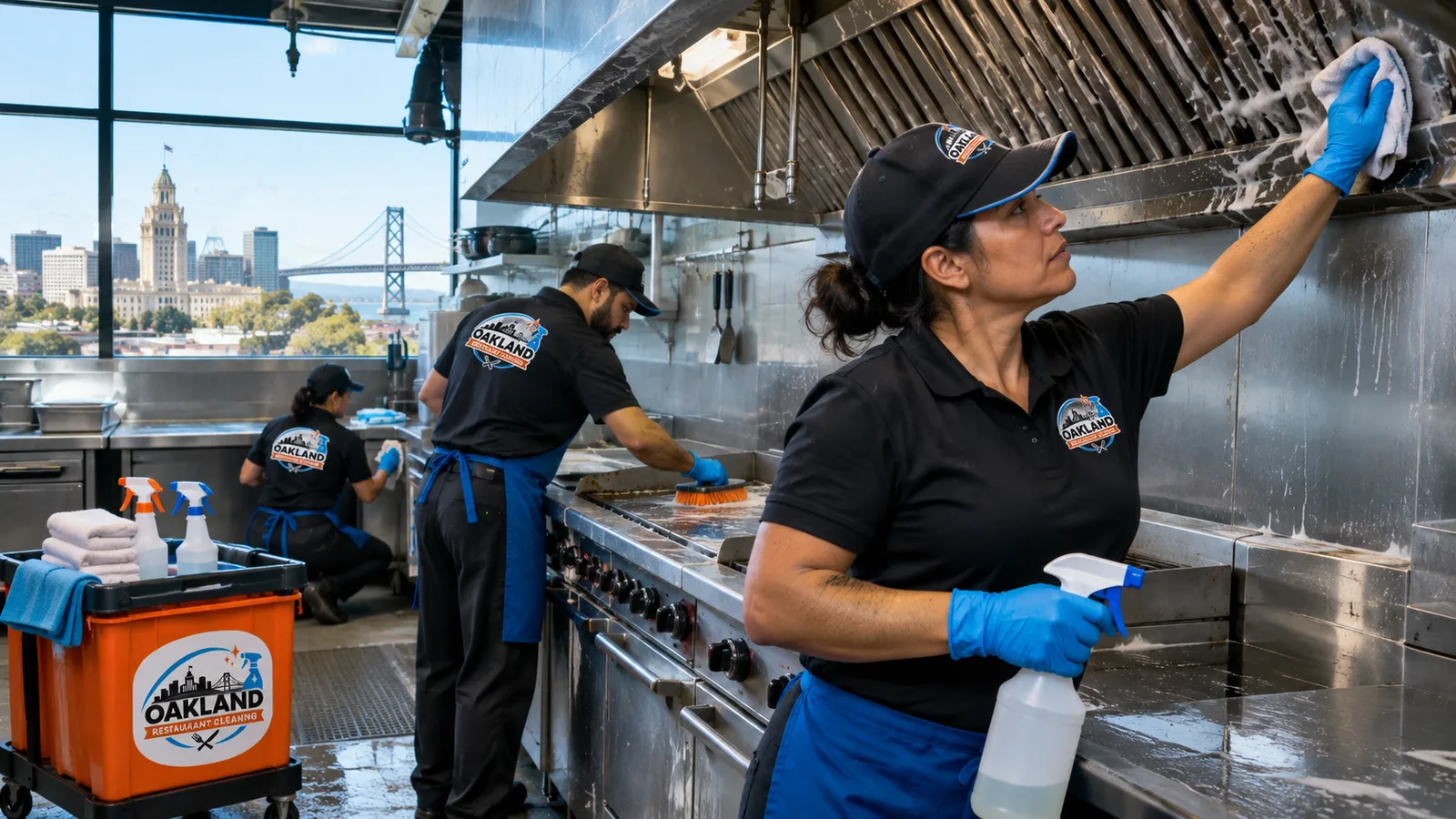
A trained restaurant cleaning crew deep cleaning stainless steel cooking equipment and surrounding surfaces in a professional Oakland kitchen.
Planned restaurant care

Restaurant Deep Cleaning in Oakland

Oakland Restaurant Cleaning provides the focused labor and equipment needed to clean areas that routine closing crews may not have time to address. As a Restaurant Cleaning Company, we build each scope around the kitchen layout, soil level, equipment access, operating schedule, and priorities identified during the initial walkthrough.

Our work can cover food-contact-adjacent surfaces, equipment exteriors, floors, walls, shelving, walk-in coolers, dining spaces, and elevated ledges. We use degreasers and cleaning methods suited to each surface rather than treating stainless steel, quarry tile, painted walls, and cooler interiors alike. Oakland's local restaurant service carries out the work with a written scope so managers know which areas are included before the cleaning date.

Oakland restaurants operate in very different settings. Uptown and Downtown businesses may need overnight work coordinated around dense dining and entertainment schedules. Jack London Square locations can have busy service periods tied to waterfront activity and events. Temescal restaurants often occupy compact storefronts where equipment clearance and staging space require careful planning. In Chinatown, tightly arranged kitchens and frequent food preparation can make access planning especially important. These conditions affect scheduling and workflow, so we confirm entry, shutdown requirements, and equipment access in advance.

Request a Callback
Cleaning coverage

Restaurant Deep Cleaning Services

Kitchen Deep Cleaning

Cleaning may include equipment exteriors, stainless steel work surfaces, backsplashes, walls, shelving, floor edges, baseboards, and accessible areas beneath or behind movable equipment. Heavy grease is treated with the appropriate dwell time before agitation and removal.

Walk-In Cooler Cleaning

Walk In Cooler Cleaning addresses accessible shelving, walls, doors, gaskets, floors, and corners after food is removed or protected by restaurant staff. We discuss temperature control, product handling responsibilities, and safe access before work begins.

High Dusting

High Dusting in Oakland restaurants can cover accessible pipes, vents, ledges, light housings, ceiling-level surfaces, and other overhead areas named in the scope. Work is scheduled to limit dust transfer onto food preparation surfaces.

Dining and Service Areas

Restaurant detailed cleaning can include tables, chair frames, partitions, service counters, baseboards, wall marks, and other high-touch or easily overlooked surfaces. Materials are checked before cleaners or agitation methods are selected.

Floor and Edge Detail

We address grease film, soil along wall lines, corners, under-counter areas, and accessible spaces around equipment. Cleaning methods depend on whether the floor is quarry tile, resilient flooring, sealed concrete, or another commercial surface.

Scheduled Deep Cleaning

One-time cleanups and recurring deep-clean schedules are scoped separately. Frequency depends on cooking volume, grease accumulation, staffing capacity, and how quickly difficult areas become soiled.

Request a Callback
Surface-specific cleaning

Commercial Kitchen Deep Cleaning Oakland Restaurants Can Plan Around

Professional restaurant deep cleaning starts with access and safety. Before cleaning begins, the manager should identify equipment that may be moved, shut down, or left untouched. Restaurant staff remain responsible for food handling and for any appliance shutdown or restart that requires an authorized technician. Our team then protects nearby areas, removes loose debris, applies the proper cleaning chemistry, agitates buildup, and recovers residue without mixing incompatible products.

Degreasing is a process, not a quick spray-and-wipe task. The product must match the surface, remain wet for its labeled dwell time, and be removed thoroughly. Abrasive pads that may be acceptable on a durable floor can scratch stainless steel or damage coated finishes. Sanitizing, when included, takes place after cleaning because grease and food soil interfere with direct surface contact.

Kitchen exhaust hood, duct, and fan cleaning is a specialized fire-safety discipline governed by requirements distinct from general kitchen cleaning. If that work is needed, it should be handled by a qualified exhaust-system provider. Our written scope distinguishes accessible exterior cleaning from internal exhaust-system work.

Request a Callback
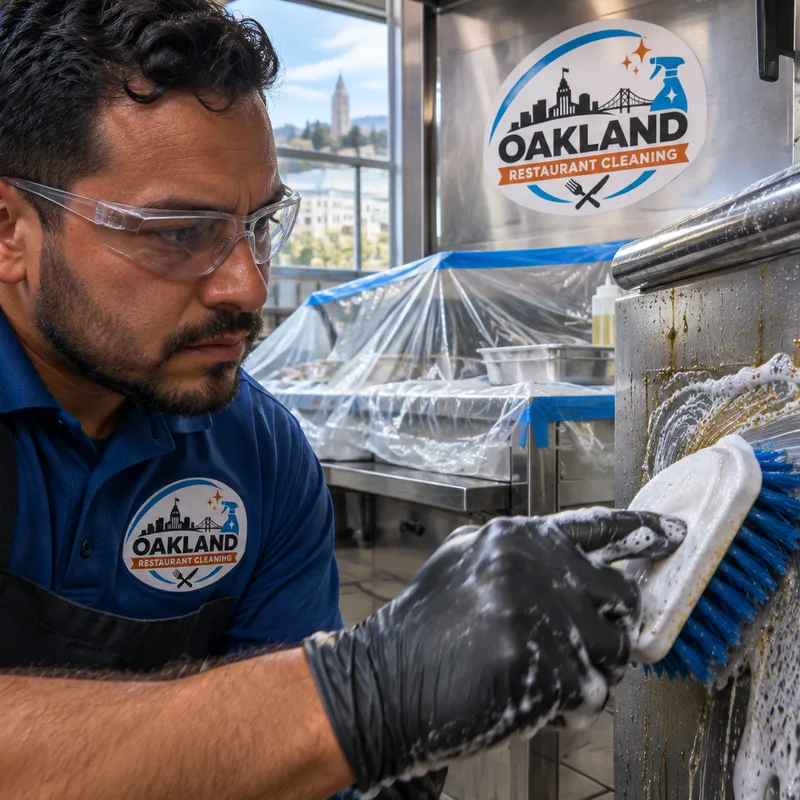
Close view of a restaurant cleaner agitating grease on an accessible stainless steel equipment exterior with nearby food preparation areas protected.
Surface-specific products and tools help remove grease without damaging commercial finishes.
Controlled workflow

How Professional Restaurant Deep Cleaning Works

A defined sequence protects food-service areas, controls soil, and keeps the agreed scope clear from the walkthrough through the final review.

01

Walk Through the Restaurant

We review the kitchen, walk-in cooler, dining room, service areas, and requested high surfaces. The walkthrough identifies soil conditions, delicate materials, access restrictions, water availability, and equipment that must stay in place.

02

Set the Written Scope

The proposal defines included surfaces, exclusions, timing, and preparation responsibilities. It also states whether the job is a one-time reset or part of a recurring restaurant deep-cleaning plan.

03

Prepare the Work Areas

Restaurant staff remove or secure food, smallwares, and sensitive items as agreed. The cleaning crew stages tools, protects adjacent surfaces, places caution signs, and confirms which equipment is safe to approach.

04

Clean in a Controlled Sequence

Work generally moves from high surfaces to lower ones and from drier tasks to wet cleaning. Grease and soil are collected rather than spread into already cleaned areas, and floors are completed late in the sequence.

05

Review the Completed Scope

A final walkthrough checks the areas listed in the proposal and identifies any access limitation found during the job. Managers can then set priorities for the next service based on how the restaurant operates.

Request a Callback
Before the cleaning date

What Restaurant Deep Cleaners Need Before the Job

Good preparation protects food, shortens avoidable delays, and gives the crew access to the surfaces being cleaned. Remove exposed ingredients, disposable packaging, utensils, and small appliances from the work zone. Empty cooler shelves when their interiors are included, or confirm a staged shelf-by-shelf plan. Clearly label equipment that cannot be moved, exposed to moisture, or powered down.

Access behind cooking equipment deserves special attention. Gas-fired, hard-wired, plumbed, or permanently installed equipment should not be disconnected by a general cleaning crew. If a licensed trade or authorized service technician must move an appliance, arrange that work before the cleaning appointment. The same rule applies when restarting refrigeration or cooking equipment requires a qualified person.

For high dusting, managers should identify alarms, fragile fixtures, open storage, and preparation surfaces beneath the work zone. Depending on ceiling height and access, the crew may use extension tools or commercial access equipment. Cleaning should never block an occupied exit route, and wet floors need clear warning signs until they are dry.
Request a Callback
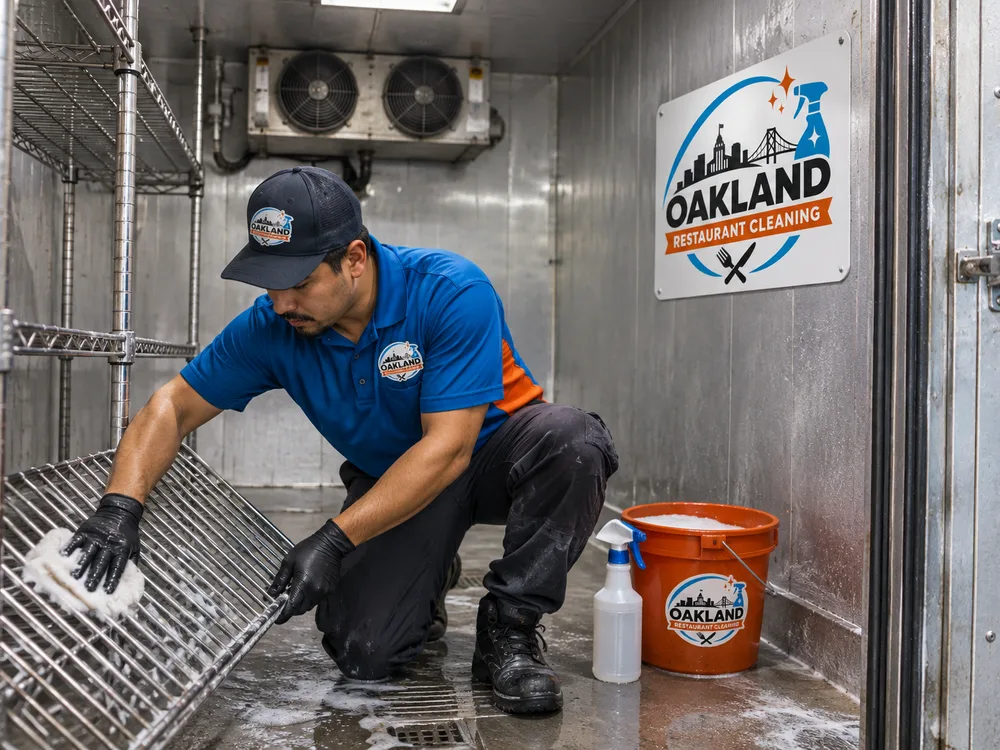
An emptied commercial walk-in cooler with a restaurant cleaning professional wiping removable shelving, door gaskets, wall panels, and floor edges.
Cooler cleaning is planned around food removal, temperature control, and careful treatment of seals and panels.
Cooler cleaning scope

Walk-In Cooler Care and Detailed Cleaning

A walk-in cooler needs a plan that protects stored products and avoids unnecessary temperature loss. Restaurant staff should decide where food will be held and who will monitor it while shelves and interior surfaces are accessible. The cleaning scope can include removable shelving, wall panels, door surfaces, handles, gaskets, floor edges, and accessible corners.

Cooler panels and gaskets require gentler treatment than heavily soiled kitchen floors. Excess water should not be forced into seams, electrical components, fan housings, or controls. Cleaners also need to avoid damaging door seals, which help the unit close correctly. Ice buildup, leaking condensate, damaged gaskets, failing refrigeration, and mold inside inaccessible mechanical components are maintenance issues that may require a refrigeration or remediation specialist rather than a cleaning crew.

Restaurant detailed cleaning is most effective when managers separate cleaning concerns from repair concerns during the walkthrough. That distinction produces a practical scope and allows the right professional to handle each condition.

Request a Callback

Tell us which areas are falling behind, when the restaurant is available, and whether you need a one-time reset or a recurring deep-clean plan. We will define the scope before work is scheduled.

Call for a Free Quote
Common questions

Questions About Restaurant Deep Cleaning Services

How much does restaurant deep cleaning cost in Oakland?

Restaurant deep-cleaning prices depend on square footage, kitchen condition, equipment access, included areas, and whether heavy grease or high dusting is required. A compact dining area with a lightly soiled kitchen takes a different amount of labor than a large operation requiring equipment pullouts, cooler cleaning, and overhead work. An on-site walkthrough at the Oakland property is the most reliable way to produce a written price.

Can cleaning be scheduled after the restaurant closes?

Yes, after-hours scheduling may be available and is commonly requested for restaurant deep cleaning in Oakland. Uptown, Downtown, and Jack London Square restaurants often need work coordinated around dinner service, events, deliveries, security, and building access. The cleaning window, key or alarm procedure, and responsible closing contact should be confirmed before the appointment.

How long does a professional restaurant deep cleaning take?

A professional restaurant deep cleaning may take several hours or require a longer overnight window, depending on the scope and soil level. Kitchen size, cooler contents, equipment access, drying time, and high-surface work all affect duration. We establish a realistic work window after inspecting the restaurant rather than promising a standard completion time.

Do you clean behind restaurant equipment?

Accessible areas behind movable equipment can be included when the equipment can be moved safely and legally. General cleaners should not disconnect gas lines, plumbing, electrical wiring, or fixed appliances. If a qualified technician is required to move or restart equipment, the restaurant must arrange that work before cleaning begins.

What must the restaurant do before walk-in cooler cleaning?

The restaurant must remove, relocate, or securely protect food before walk-in cooler cleaning begins. Management should maintain required food temperatures and decide whether the cooler will be cleaned all at once or in stages. Product handling, refrigeration controls, fan housings, and electrical components remain outside the cleaning scope unless specifically addressed by an appropriately qualified provider.

Is high dusting included with kitchen deep cleaning?

High dusting is included only when it appears in the written scope. Ceiling height, safe access, overhead pipes, light fixtures, vents, and surfaces beneath the work area affect the method and labor required. Oakland restaurants in compact storefronts may need extra staging coordination because ladders or access equipment cannot obstruct exits or active work areas.

Does commercial kitchen deep cleaning include hood and duct cleaning?

Internal hood, duct, and exhaust-fan cleaning is generally separate from routine commercial kitchen deep cleaning. Those systems involve specialized fire-safety procedures and should be serviced by a qualified kitchen exhaust provider. Accessible hood exteriors may be included when they are clearly identified in the proposal.

How often should a restaurant schedule detailed cleaning?

The right interval depends on cooking methods, service volume, grease production, staffing, and the areas included in nightly cleaning. A restaurant using fryers or charbroilers may need certain surfaces addressed more often than a low-grease operation. After the initial deep clean, managers can use the rate of soil return to set a practical recurring schedule.

Plan the next cleaning

Plan a Cleaner Restaurant With a Defined Scope

Share your priorities, access window, and problem areas with Oakland Restaurant Cleaning. We will assess the space and outline a practical plan for the kitchen, cooler, dining areas, floors, and elevated surfaces.