Control Loose Debris
Dust and fibers on ledges, pipes, and fixtures can loosen when air moves through the kitchen or equipment vibrates. Source capture removes that material with less redistribution.
Serving Oakland, California & surrounding areas
Mon–Fri 8am–6pm · Sat 9am–2pm
Remove overhead grease, dust, and loose debris with a planned cleaning scope that respects kitchen equipment, food-contact areas, and operating schedules.
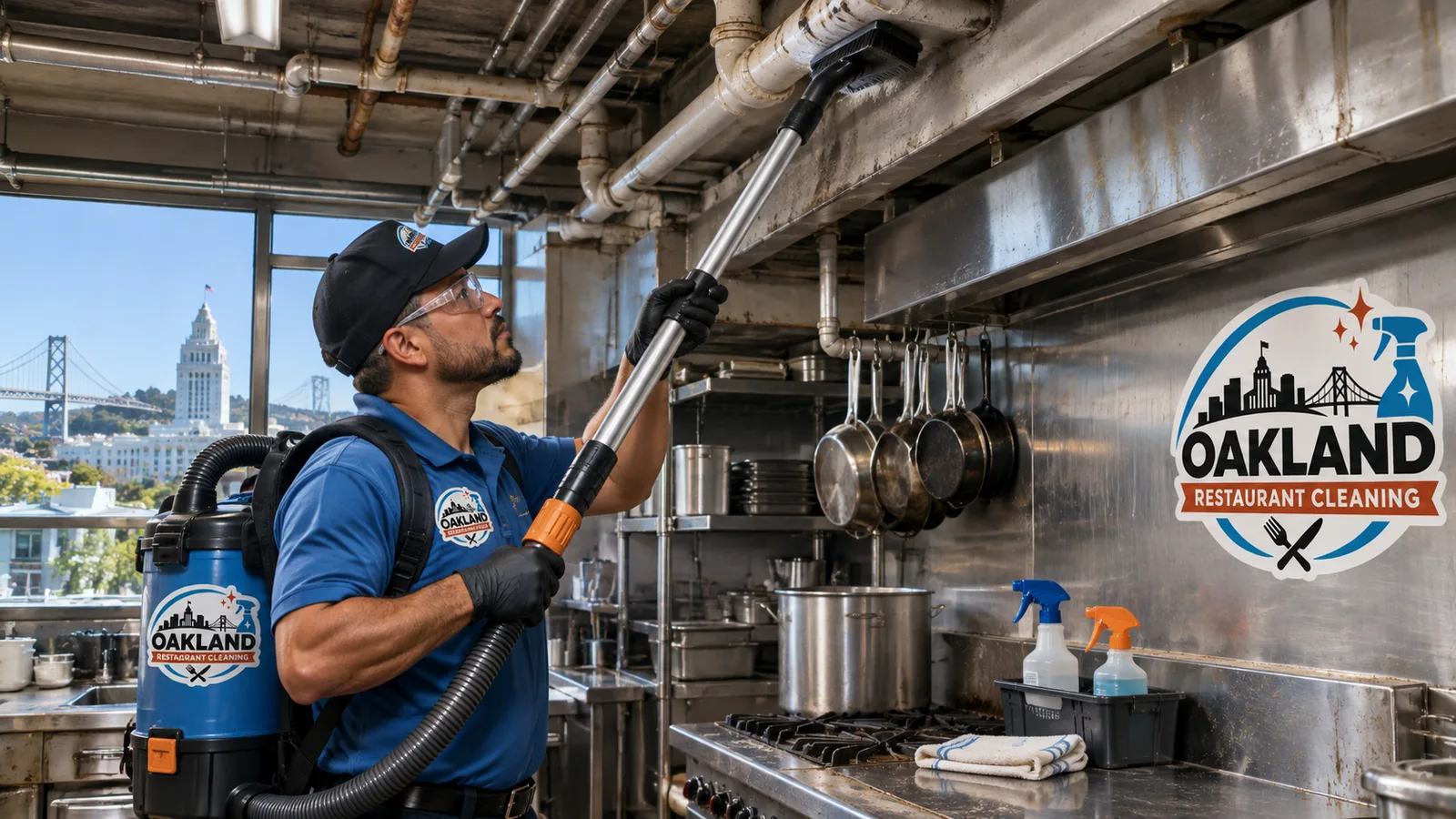
Restaurant High Dusting Piedmont addresses buildup on surfaces that routine floor and counter cleaning cannot reach. Typical targets include exposed pipes, conduit, ceiling vents, light housings, beams, wall tops, refrigeration tops, and other high ledges. These areas can collect airborne grease, dust, and fibers that eventually loosen or become harder to remove.
Oakland Restaurant Cleaning plans the work around the kitchen layout, surface condition, and access restrictions. During the walkthrough, Oakland's restaurant specialists identify what can be cleaned with extension equipment and where approved access equipment may be needed. We also establish which appliances, prep areas, shelving, or sensitive fixtures require protection before overhead work begins.
Piedmont is primarily residential, so its restaurants are concentrated in small commercial areas rather than large industrial corridors. That makes coordination especially important where kitchens have compact back-of-house layouts, close neighboring businesses, or limited staging space. The crew needs a clear route for equipment and enough time to protect the work area without interfering with food preparation or customer service.
A high-dusting scope is based on the surfaces present in the room, not a generic checklist. In open-ceiling kitchens, that can include structural members, pipes, cable trays, conduit, duct exteriors, sprinkler piping, and suspended fixtures. Finished ceilings may instead require attention to vents, light housings, corners, wall-to-ceiling lines, and the tops of tall equipment.
The preferred method is controlled removal. HEPA-filtered vacuums with extension poles can capture dry, loose material at the source. Microfiber tools may be suitable for some ledges and fixture exteriors. Greasy film may require compatible degreasing methods, but the cleaner must first consider surface finish, electrical components, and the risk of dripping onto equipment.
High dusting does not replace hood, duct, or exhaust-system cleaning. The inaccessible interior of a grease exhaust system is a separate scope with different methods and access requirements. High dusting also excludes work on energized components and damaged materials that need repair rather than cleaning.
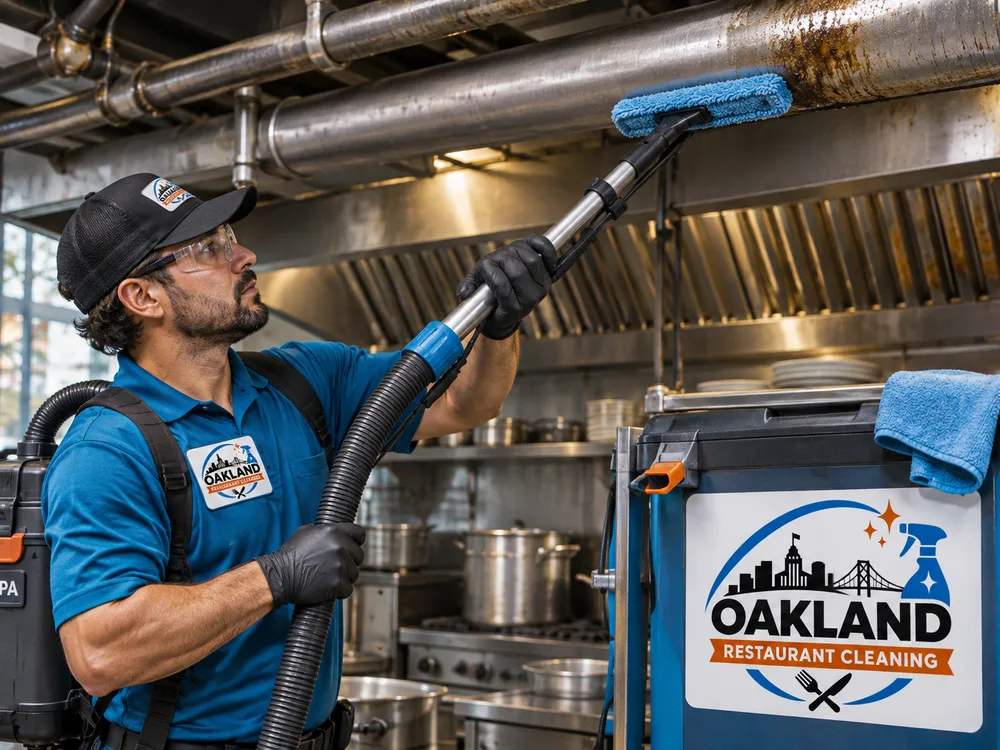
Dust and fibers on ledges, pipes, and fixtures can loosen when air moves through the kitchen or equipment vibrates. Source capture removes that material with less redistribution.
Airborne cooking residue can bind dust to nearby surfaces. The appropriate method depends on how heavy the film is and whether the underlying finish tolerates a degreaser.
Exposed ceilings and high fixtures are visible in many open kitchens and service areas. Removing dark buildup gives managers a cleaner baseline for routine inspections.
Once heavy accumulation is removed, managers can set a practical interval based on cooking volume, ventilation, ceiling configuration, and the speed at which residue returns.
A defined sequence protects the kitchen, controls overhead residue, and establishes a clear path from walkthrough to final inspection.
We identify overhead surfaces, grease levels, fragile fixtures, ceiling height, and access constraints. The walkthrough also separates high dusting from exhaust-system work, repairs, or other specialized tasks.
The written scope states which rooms and surfaces are included. Work is normally planned outside food preparation and service periods, with enough time for setup, cleaning, inspection, and removal of protective materials.
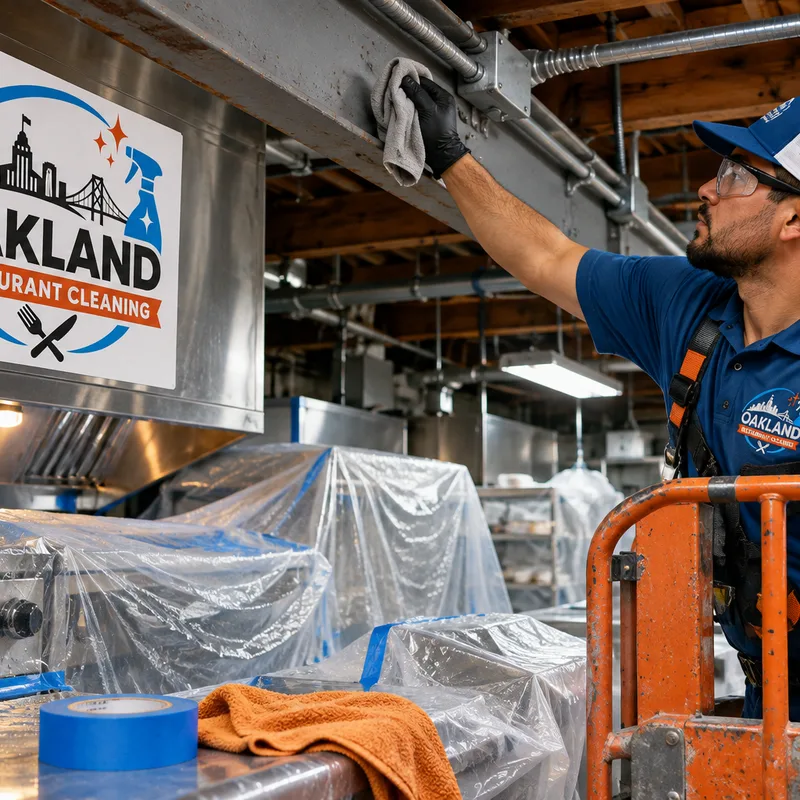
Food and exposed utensils must be removed or secured before cleaning. Appropriate coverings protect prep surfaces and equipment, while the crew establishes safe working clearance around ladders or other access equipment.
The crew uses suitable vacuum, microfiber, and degreasing methods for each surface. Working from the highest points downward helps control residue and keeps completed areas from being contaminated again.
Accessible surfaces are checked for remaining buildup, and settled material is removed from the protected work zone. Coverings are taken down carefully before the kitchen is returned to the operator.
Ceiling height is only one access factor. A cleaner may also need to work around cooking lines, walk-in boxes, hanging racks, refrigeration, narrow aisles, and fixed counters. Extension tools are useful when they can reach the target with adequate control. Where they cannot, the access plan must account for stable footing, manufacturer limits, and clearance from equipment.
Kitchen protection starts before a tool touches the ceiling. Food, clean wares, and single-service items should not remain exposed in the work zone. Appliances and preparation surfaces may need coverings appropriate to the task. Ventilation conditions matter too, since strong air movement can carry loosened dust beyond the immediate area.
Some conditions should be reported instead of disturbed. Examples include damaged insulation, unknown fibrous material, leaking pipes, unstable ceiling components, and residue near electrical faults. Cleaning can remove accessible surface contamination, but it cannot correct the source of a leak, repair a failing finish, or determine whether an unknown material is hazardous.
The best service window allows the kitchen to stop food handling, cool equipment where necessary, and clear the target area. A small dining room with a compact kitchen may need a different plan than a restaurant with separate prep, cooking, storage, and dishwashing rooms. Phased work can keep the scope manageable when one closure window is too short.
Piedmont Avenue is outside the City of Piedmont and lies in Oakland, while restaurants within Piedmont operate under Piedmont's local jurisdiction. Confirming the actual service address prevents confusion over access instructions and local operating requirements. Oakland Restaurant Cleaning is based nearby on Martin Luther King Jr Way in Oakland, which supports practical coordination for walkthroughs and scheduled work in the area.
Frequency should follow conditions rather than a fixed claim. Kitchens with open ceilings, heavy cooking output, or visible grease migration may need attention sooner than low-volume spaces with enclosed ceilings. After the initial cleaning establishes a baseline, managers can inspect representative surfaces and schedule maintenance before buildup becomes heavy.
Restaurant high dusting in Piedmont typically costs about $500 to $1,500 for a small or moderate kitchen, while large spaces, heavy grease, tall ceilings, or difficult access may run $1,500 to $3,500 or more. These are general local planning ranges, not a firm quote.
Final pricing depends on square footage, ceiling height, buildup, exposed utilities, equipment protection, access equipment, crew time, and after-hours scheduling. A walkthrough confirms included surfaces, exclusions, and the exact cost before service.
Get a written scope that identifies the overhead surfaces, protection needs, access plan, and service window before cleaning begins.
Call for a Free QuoteHigh dusting is generally scheduled when food preparation and customer service have stopped. Overhead work can release dust or cleaning residue, and access equipment needs clear floor space. Compact kitchens in Piedmont's small commercial areas often benefit from an after-hours window or a phased plan.
A small kitchen may be completed within one work window, while a large or heavily soiled space can require additional time or multiple phases. Ceiling height, grease level, equipment protection, and access around fixed cooking lines determine the schedule. The walkthrough produces a more useful estimate than square footage alone.
High dusting does not automatically include cleaning inside a commercial grease exhaust hood or duct system. It can cover accessible exterior surfaces such as duct exteriors, nearby pipes, and overhead ledges when they are named in the scope. Interior exhaust cleaning requires separate methods and access.
Exposed food, utensils, and clean wares must be removed or securely protected before overhead cleaning starts. Fixed equipment usually stays in place and may be covered, while movable items can be relocated to create access. The preparation plan is based on the specific layout and scheduled work zone.
Removal depends on the material, finish, access, and condition of the buildup. Some painted, porous, corroded, or damaged surfaces cannot tolerate aggressive degreasing. A test area may be appropriate, and surfaces that need repair or refinishing are identified rather than overworked.
The interval should be based on inspection results, cooking volume, ceiling design, and how quickly grease and dust return. Open ceilings and nearby exposed utilities can show accumulation sooner than smooth enclosed ceilings. A baseline cleaning makes later inspections more consistent.
Tell us about the kitchen layout, ceiling height, visible buildup, and preferred service window. We will help define a practical high-dusting scope for your Piedmont restaurant.